PLANETS @ ECOFRAM 2026 (15-17.06.2026, Luleå, Sweden)
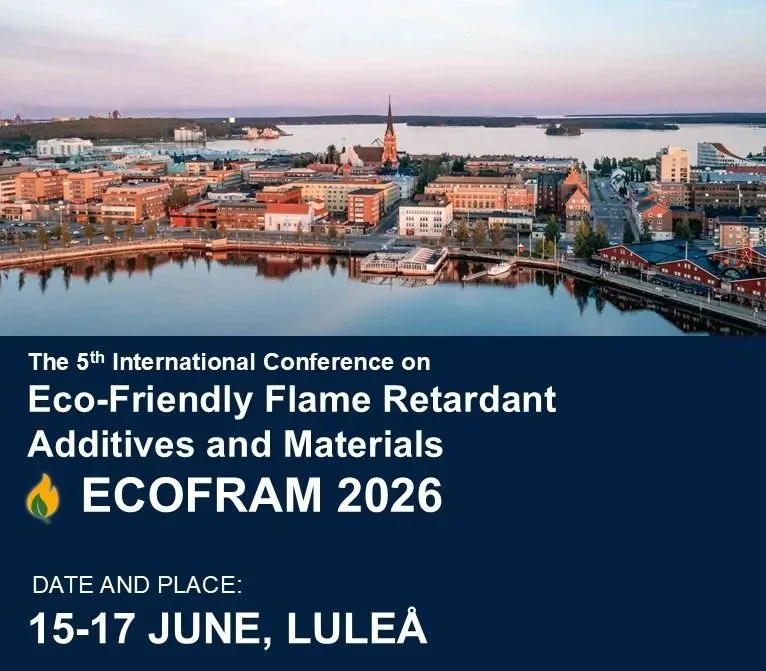
From 15 to 17 June 2026, the ECOFRAM 2026 conference (The 5th International Conference on Eco-Friendly Flame Retardant Additives and Materials) took place in Luleå, Sweden, bringing together around 50 participants from research and scientific communities, industry, innovators and public authorities. The conference focused on the intersection of fire safety, sustainability and environmental responsibility, creating an interdisciplinary platform to discuss how flame-retardant materials can be made safer and more sustainable.
The conference addressed a wide range of topics, including bio-based and biodegradable flame retardants, recyclable polymers and composites, sustainable flame-retardant materials, eco-friendly coatings and textiles, environmental and toxicological impacts, and regulatory aspects.
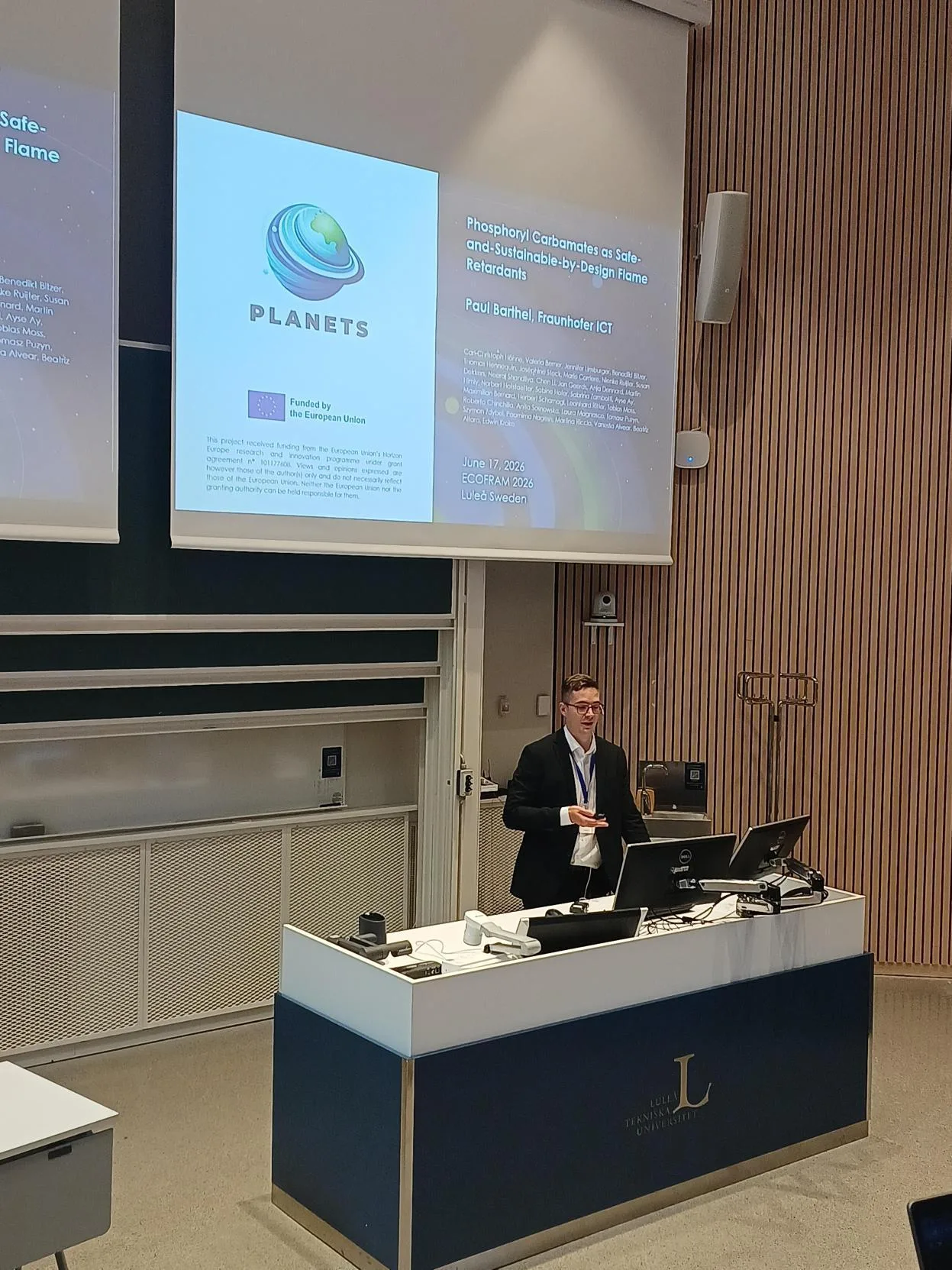
Given the strong alignment with the PLANETS flame retardant case study and its Safe-and-Sustainable-by-Design (SSbD) approach, the project was represented by Paul Barthel, from Fraunhofer ICT, who gave an oral presentation during the PL3 Plenary Session, entitled “Phosphoryl Carbamates as Safe-and-Sustainable-by-Design Flame Retardants”.
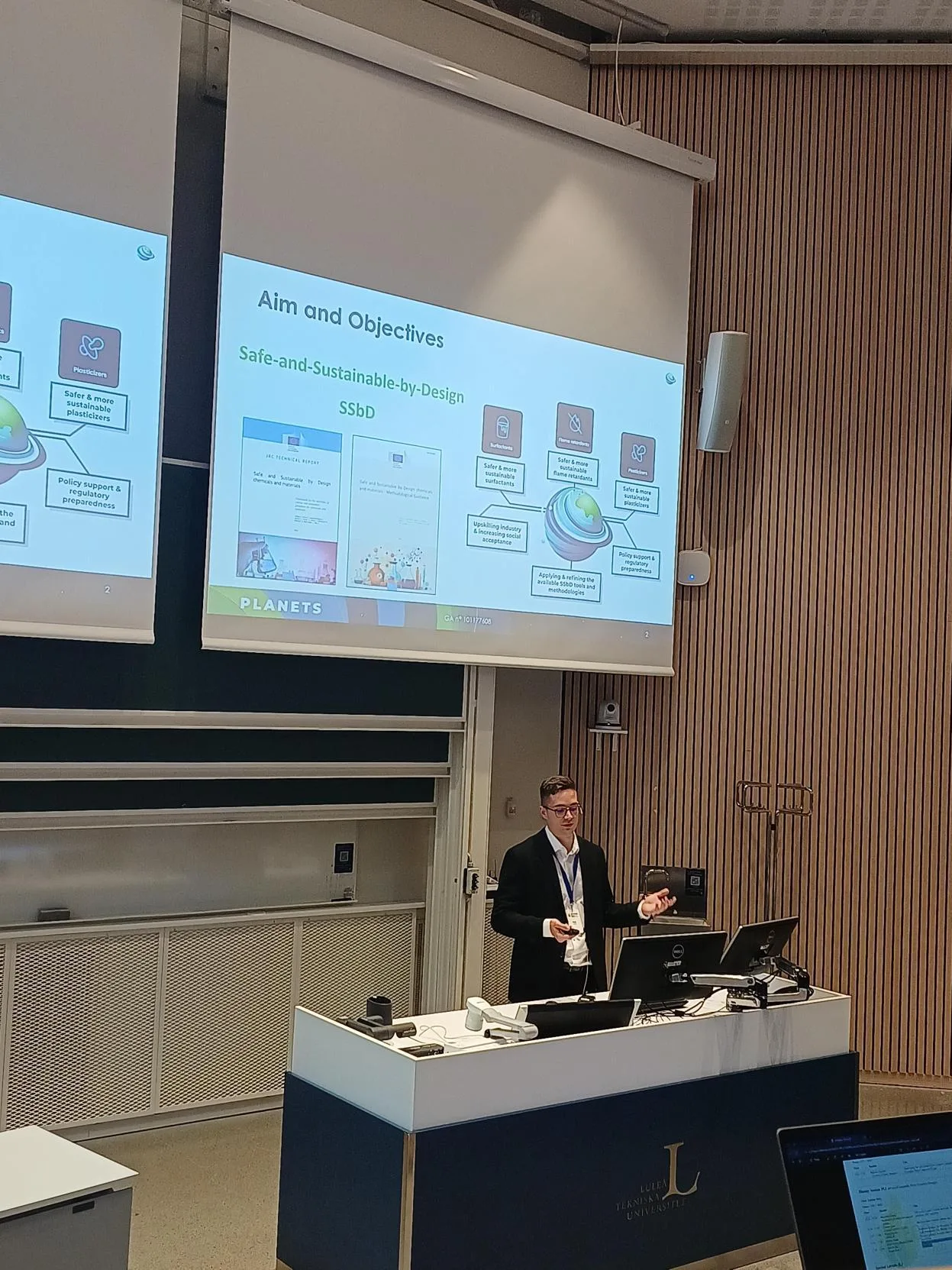
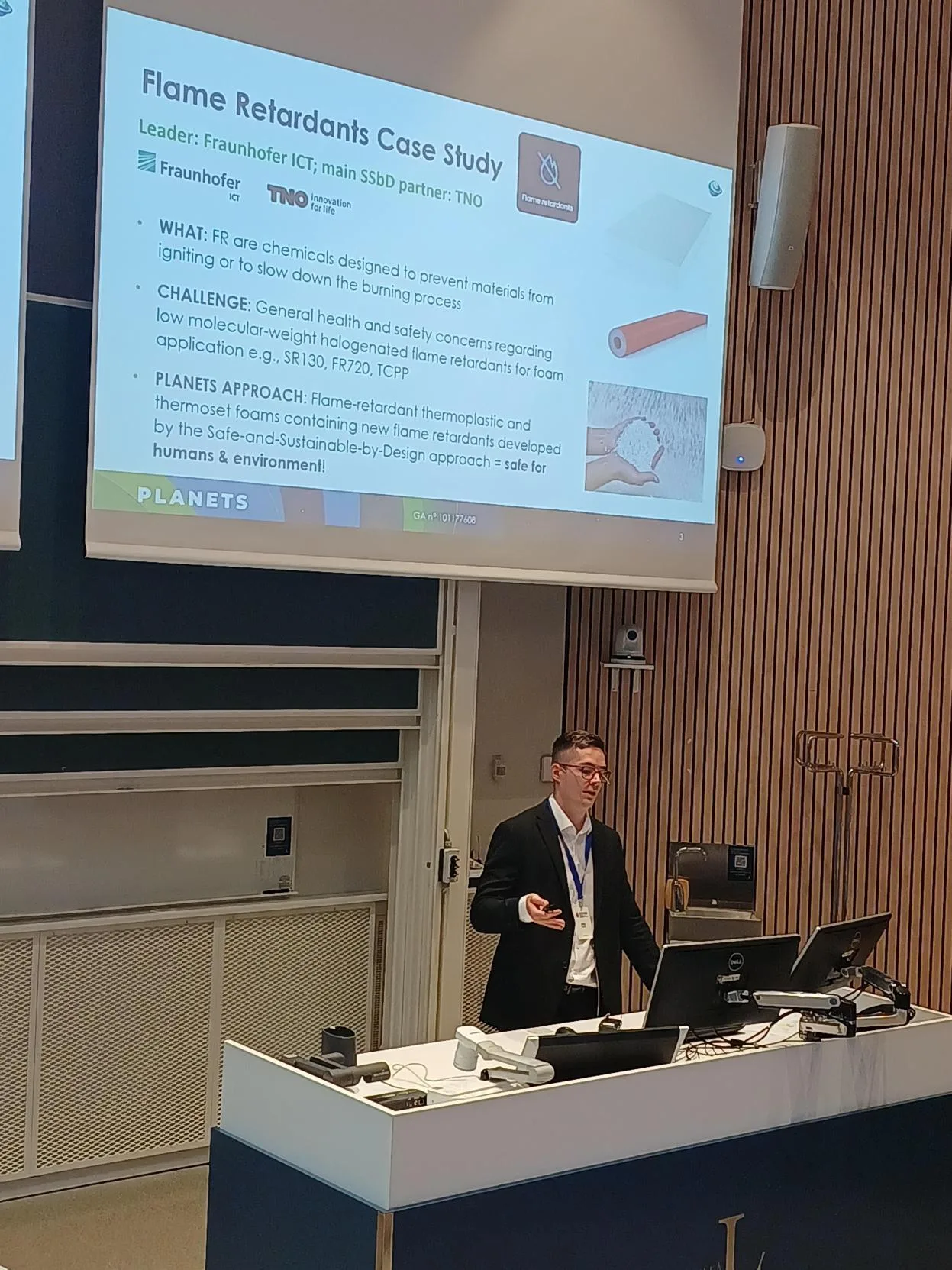
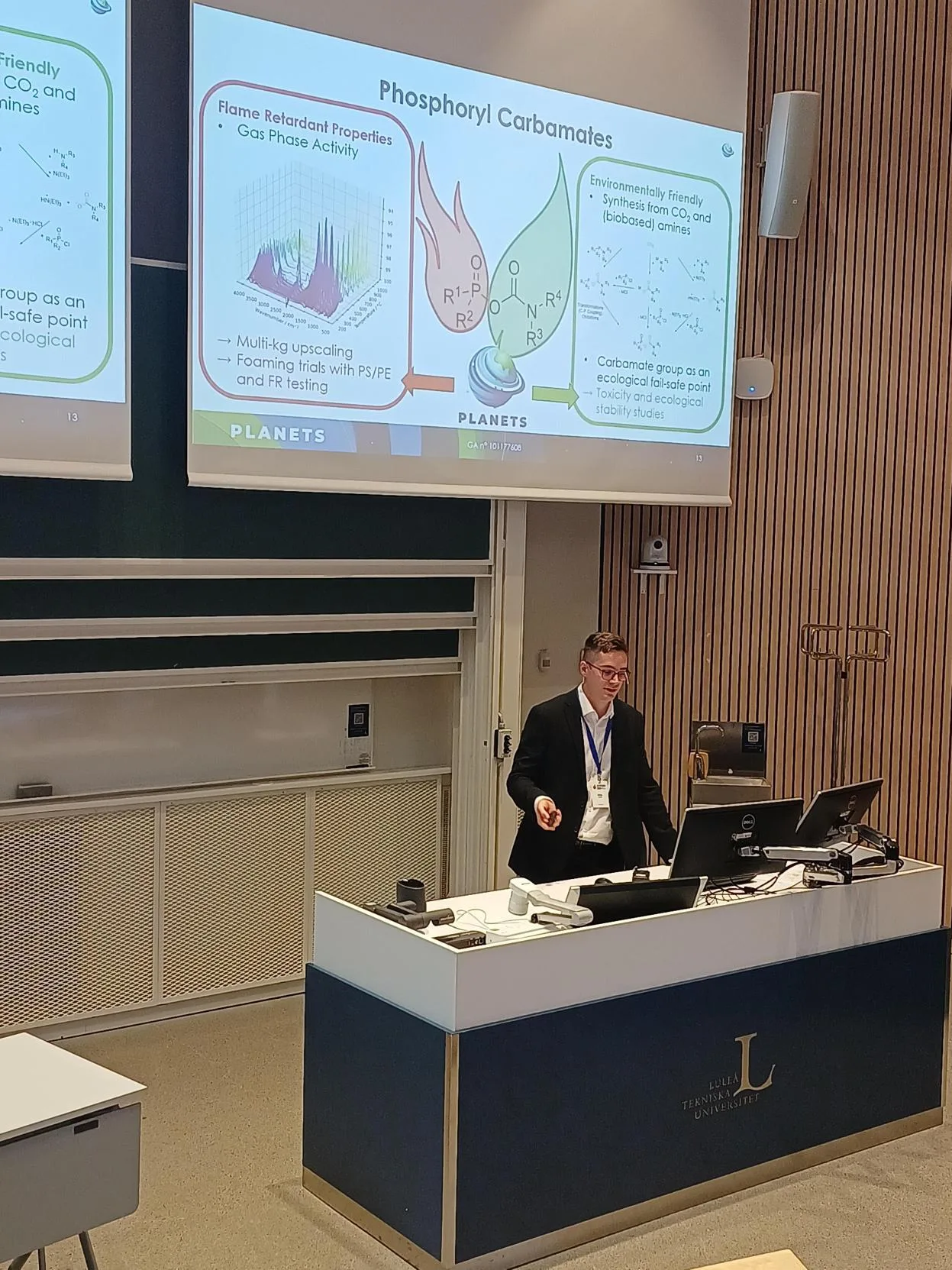
The presentation introduced the concept of SSbD, explaining its relevance for the development of safer and more sustainable materials, before presenting the PLANETS project and its work on alternative flame retardants. Particular attention was given to the Flame Retardants Case Study, and more specifically to the thermoplastic foams and the development of phosphoryl carbamates as potential SSbD alternative. The presentation covered research carried out at Fraunhofer ICT, including the synthesis of phosphoryl carbamates from CO₂, their flame retardant performance in thermoplastics, and their environmental profile compared with current benchmark flame retardants. The research also demonstrated how these materials can be considered within the broader SSbD framework of PLANETS.
ECOFRAM 2026 provided an excellent opportunity to disseminate the objectives and results of PLANETS to a specialised audience working on flame retardance and sustainable materials. To the presentation followed valuable discussions and exchanges with researchers and industry representatives, providing an opportunity to gather feedback and perspectives relevant to the further development of SSbD alternatives in this case study.
The strong thematic connection between ECOFRAM and the PLANETS flame-retardant use case underlined the importance of bringing SSbD approaches into dialogue with the wider fire-safety and materials community.