logotype
  • Project
    • About PLANETS
    • Objectives
  • Applications
    • Surfactants
    • Flame retardants
    • Plasticizers
  • Partners
  • Collaborations
  • Resources
  • News
  • Contact
Linkedin
logotype
  • Project
    • About PLANETS
    • Objectives
  • Applications
    • Surfactants
    • Flame retardants
    • Plasticizers
  • Partners
  • Collaborations
  • Resources
  • News
  • Contact
Linkedin
  • Project
    • About PLANETS
    • Objectives
  • Applications
    • Surfactants
    • Flame retardants
    • Plasticizers
  • Partners
  • Collaborations
  • Resources
  • News
  • Contact
logotype
  • Project
    • About PLANETS
    • Objectives
  • Applications
    • Surfactants
    • Flame retardants
    • Plasticizers
  • Partners
  • Collaborations
  • Resources
  • News
  • Contact
workshop TAG
HomePosts Tagged "workshop"

Tag: workshop

2ndNSCworkshopSSbDscenarios_Cover
News
April 13, 2026

Recap of the 2nd NSC workshop on “SSbD scenarios” on 5 December 2025

Following up from the 1st NSC workshop on “SSbD scenarios for advanced and incremental innovations” (23 June 2025), the NSC Working Group on Safe and Sustainable by Design (SSbD), Innovation & Regulation organised a virtual 2nd NSC workshop on SSbD Scenarios on 5th December 2025. Similarly as the first workshop, this second one was prepared as a collaborative effort among several EU-funded projects: DESIDERATA,  PLANETS, SSbD4CheM, and SUNRISE.

The 1st NSC scenarios workshop laid the basis by the description of a scenario by aspects of novelty, exposure, severity, (environmental) sustainability, (economic) scope and immediacy. Case studies enabled a refinement of the scenario description (Wohlleben et al. 2025). The concept of a scenario was integrated by JRC into the revised SSbD Framework, where it serves as a bridge between the SSbD scoping and a tailored safety and sustainability assessment (reproduced in lower figure). It was described as “a specific and real set of conditions (scoping analysis elements) that define the context in which the SSbD assessment is carried out.”(Garmendia Aguirre et al. 2025). 

This 2nd NSC scenarios workshop explored how to describe an SSbD scenario, the tailoring rules related, as well as how to select which tailored approach fits best a specific innovation case. Examples of real-world cases were provided by innovators from the projects DESIDERATA, PLANETS, SSbD4CheM, and SUNRISE. In breakout sessions moderated teams went through the respective cases to define the SSbD maturity, pull and push, expected commercial value, probability of success (technical and commercial) and ultimately the return on investment that additional SSbD would expect. Obtained results were compared to six proposedly archetypal SSbD scenarios. This business-focussed algorithm enables defining a tailored SSbD in a more straight-forward manner. Such an approach, based on specifications collected during scoping, could argue for more or less extensive SSbD assessment to be implemented for different innovation cases, providing arguments for innovators in their discussion with management. 
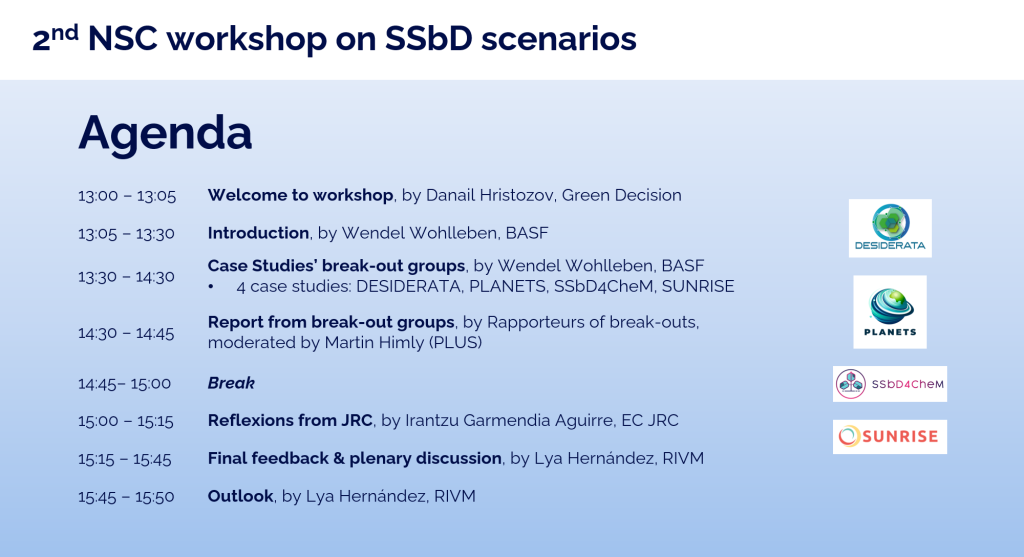
2ndNSCworkshopSSbDscenarios_Agenda
Agenda of the NSC workshop on SSbD scenarios on 5 December 2025

Danail Hristozov (GreenDecision, and chair of the NSC WG on SSbD) opened the workshop and welcomed the more than 50 international participants from academia (54%), large industry (17%), SME (9%), consultants (7%), regulators (2%) and EU institutions (9%). 
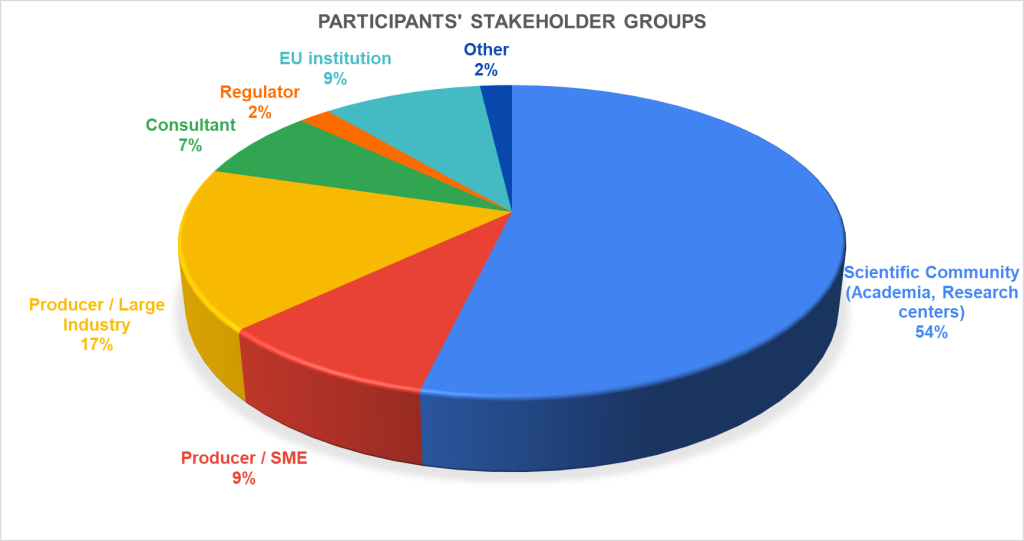
2ndNSCworkshopSSbDscenarios_StakeholderGroups
Overview of the participants’ stakeholder groups

Wendel Wohlleben (BAuA, formerly BASF, and co-chair of the NSC WG on SSbD) presented how to tailor the SSbD implementation by using the scenarios. He explained how the most relevant aspects describing the scenario were selected after the 1st workshop, and how the newly developed spreadsheet “SSbD-ified ECV calculator” estimates the impact of implementing SSbD into an innovation project plan. The standardised business metric of the “Expected Commercial Value (ECV)” was used as the basis for the tool, which had been made available to all workshop participants, and feedback was gathered during the break-out groups. 

Workshop participants split up into the break-out groups, where the tailoring and other aspects in the different innovation case were explored and discussed: 

  • DESIDERATA case study: Olga Thoda, from MONOLITHOS, on geopolymers originating from mining waste as replacement of Aluminum in construction, moderated by Lya Hernandez, RIVM.
  • PLANETS case study: Tobias Moss, from Budenheim, on flame retardants in construction, moderated by Carla Caldeira, SYENSQO.
  • SSbD4CheM case study: Ondej Panak, from the Slovenian National Institute of Chemistry, on cosmetics (assisted by Assaf Assis, David Barak, and Dror Cohen, from AHAVA Dead Sea Laboratories, moderated by Martin Himly, PLUS.
  • SUNRISE case study: María José López Tendero, from Laurentia Technologies, on post-harvest fruit treatment based on safer microencapsulated oil, moderated by Danail Hristozov, GreenDecision.

Martin Himly (PLUS and chair of the NSC WG on ETC) moderated the joint reporting session of the different breakouts, where the discussions in each of the groups were briefly summarised and discussed in the plenary. 

Irantzu Garmendia Aguirre from the European Commission’s Joint Research Centre (JRC) contributed key insights to the workshop, sharing the JRC’s perspectives on the current adaptations within the SSbD framework. Her intervention addressed the core SSbD principles, the scoping analysis, and the development of SSbD scenarios, highlighting their relevance for advancing safe and sustainable innovation.

The workshop ended with a final round of feedback and plenary discussion, moderated by Lya Hernández (RIVM), where workshop participants dived into vivid discussions, which will be picked up in the 3rd NSC scenarios workshop anticipated for late spring 2026.

Two main activities are planned as follow-ups of this 2nd workshop: A third workshop (planned for 2026) to discuss the process from archetypal scenarios to tiered SSbD assessment, and a joint peer-reviewed NSC publication about the tailored SSbD approaches followed by the different case studies presented in the workshop.

Workshop materials:

Workshop materials are publicly available in Zenodo, under DOI: 10.5281/zenodo.19554509. 

The recording of the workshop is available in the NSC YouTube channel.

References:
  • Garmendia Aguirre, I., E. Abbate, G. Bracalente, L. Mancini, G. Cappucci, D. Tosches, K. Rasmussen, B. Sokull-Klüttgen, H. Rauscher and S. Sala (2025). “Safe and Sustainable by Design Chemicals and Materials. Revised framework”. Draft for consultation, can be accessed here.
  • Wohlleben, W., C. Caldeira, M. Himly, L. G. Soeteman-Hernández, D. Hristozov and B. Serrano Alfaro (2025). Materials of the NSC workshop on “SSbD scenarios for advanced and incremental innovations” on 23 June 2025. Zenodo. DOI: 10.5281/zenodo.15756156.
  • European Commission SSbD Framework
Impression of the workshop:
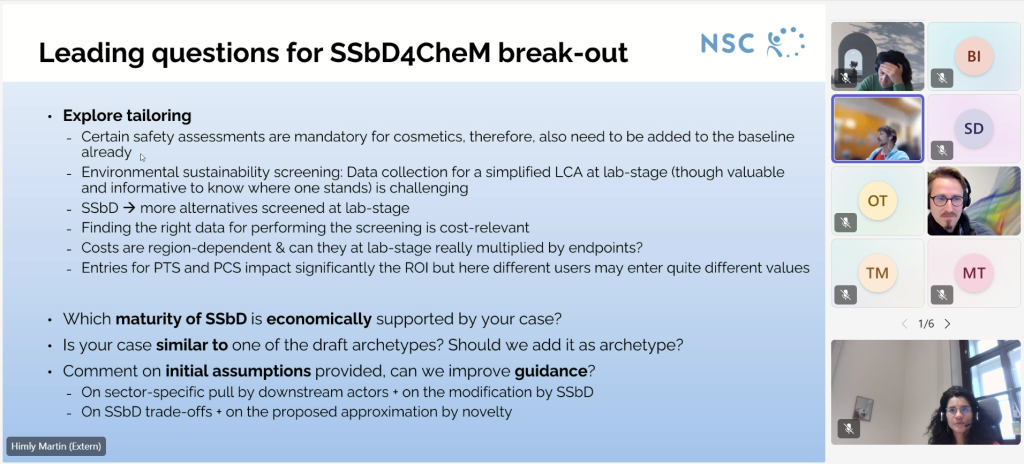
Screenshot_ReportBreakOuts
SSbDworkshop-Highschool
News
July 4, 2025

Bringing SSbD closer to the next generation: SSbD workshop for high-school students

On 16 June 2025, Andreas Falk from BNN had the great pleasure of leading a workshop on Safe-and-Sustainable-by-Design (SSbD) for high school students at HTBLA Kaindorf in Austria.

After setting the stage about the three pillars of sustainability, the three dimensions of SSbD, its indicators and 5 steps, as a real-life SSbD implementation example Andreas introduced the case studies of the PLANETS project, which is developing safer and more sustainable alternatives for chemicals with surfactant, flame retardant or plasticising functionalities. All three of these chemical classes have a large chemical-market share, highlighting the importance of research and EU-funded projects for improving chemicals that affect our daily lives.

Many teenagers in the audience will be the engineers and scientists of tomorrow, future professionals who will play a big role for reaching the EU’s aim to become climate-neutral by 2050. With this in mind, the engagement of workshop’s participants in performing a practical exercise of Tier 1 SSbD assessment of an everyday consumer product assured us that, if we invest in educating our young people, we can shape the health of people and planet in the future!

PLANETS_INTOXICOM-4
News
July 1, 2025

PLANETS co organises 4th INTOXICOM Workshop on FAIR Toxicology Education

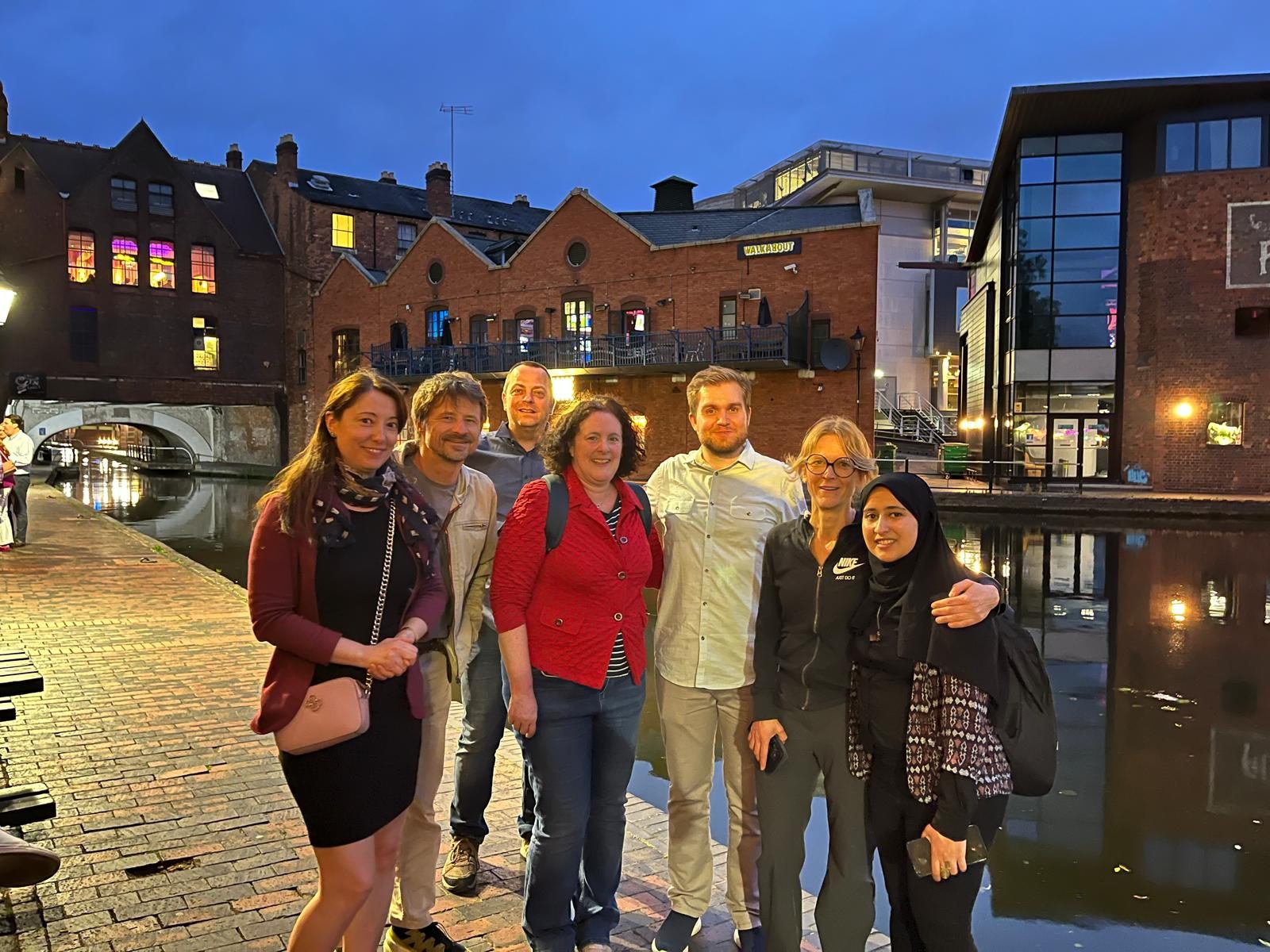
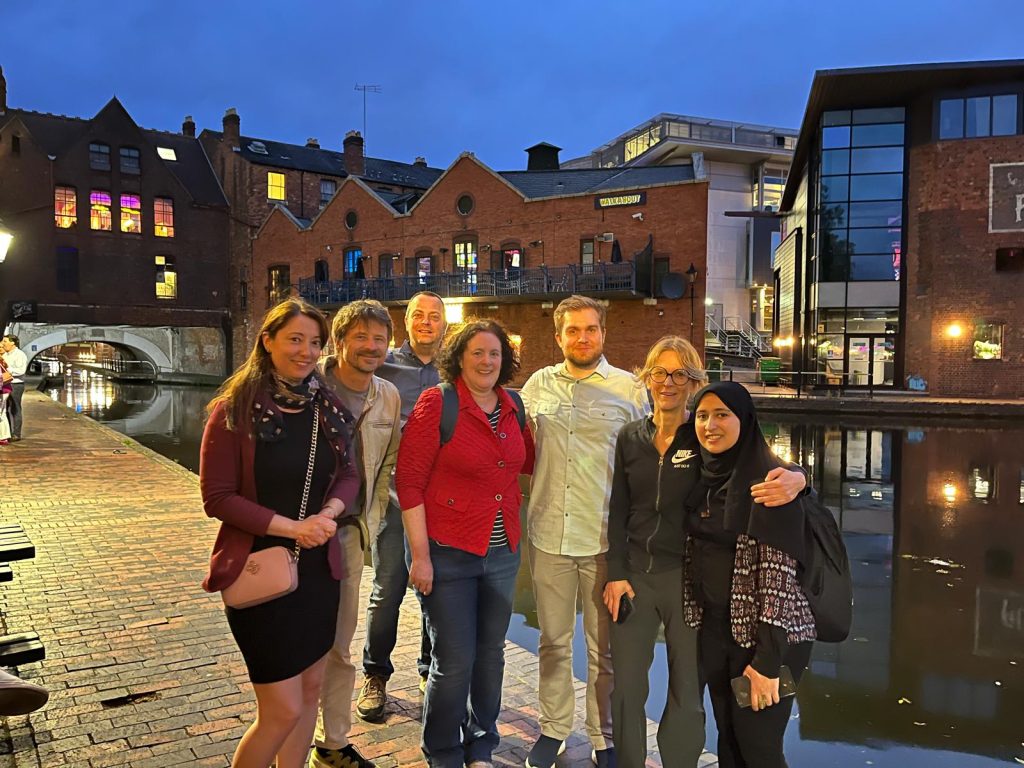
On 24–25 June 2025, the PLANETS project (in specific Martin Himly from PLUS – Task 8.2) co‑organised the 4th INTOXICOM workshop at the University of Birmingham (UK), in collaboration with projects such as PARC and initiatives including ELIXIR‑TeSS. Held under the title “Making Toxicology Educational Resources more FAIR”, the workshop brought together a broad community of experts to advance the FAIRification (Findable, Accessible, Interoperable and Reusable) of toxicology education and training.

ELIXIR_INTOXICOM

On 24–25 June 2025, the PLANETS project (in specific Martin Himly from PLUS – Task 8.2) co‑organised the 4th INTOXICOM workshop at the University of Birmingham (UK), in collaboration with projects such as PARC and initiatives including ELIXIR‑TeSS. Held under the title “Making Toxicology Educational Resources more FAIR”, the workshop brought together a broad community of experts to advance the FAIRification (Findable, Accessible, Interoperable and Reusable) of toxicology education and training.

The workshop focused on establishing FAIRified learning paths, defined as structured curricula for continuous professional development (CPD), to support cross‑education among experts across the different domains of Safe and Sustainable by Design (SSbD). These learning paths are intended for integration into ELIXIR‑TeSS, the European training platform for toxicology and sustainable innovation, thereby strengthening access to high‑quality, interoperable educational resources across Europe.

This initiative represents a community‑wide call to action to enable broad and inclusive SSbD upskilling. By fostering the development of shared curricula aligned with real innovation needs, the workshop directly supports SSbD‑guided development activities in the PLANETS case studies (surfactants, flame retardants, and plasticizers). Through this collaborative effort, PLANETS and its partners contribute to building a sustainable, FAIR‑enabled training ecosystem that underpins safer chemicals and advanced materials innovation.

PLANETS_INTOXICOM-4
Organising team onsite
StartSlide4
News
June 30, 2025

Recap of the NSC workshop on “SSbD scenarios for advanced and incremental innovations” on 23 June 2025

On 23 June 2025, the NSC Working Group on Safe and Sustainable by Design (SSbD), Innovation & Regulation organised an online workshop on “SSbD scenarios for advanced and incremental innovations” as a collaboration effort among several EU-funded projects: AlChemiSSts, DESIDERATA, PLANETS and SUNRISE. 

Not all innovation scenarios in SMEs and industry are the same. Current JRC SSbD guidance and also the Portfolio Sustainability Assessment (PSA) / Cefic concepts leave room for tailoring the SSbD approach within a tiered framework. Scenarios support the tailoring, such that SSbD is not just another burden, but increases overall competitiveness. 

But how should a SSbD scenario be described? This was exactly the aim of this first workshop.  

The workshop tested aspects that described a scenario by knowledge that is available at early innovation stages withreal-world cases kindly provided by innovators from the projects AlChemiSSts, DESIDERATA, PLANETS and SUNRISE. Shortlisted aspects included the professional environment (start-up, SME or industry), the sector of application (B2B vs B2C), the innovative height (incremental or advanced), R&D project budget, and other aspects that would be known to the innovator before starting any lab work.

Agenda of the NSC workshop on SSbD scenarios on 23 June 2025

Danail Hristozov (Green Decision, and chair of the NSC WG on SSbD) opened the workshop and welcomed the more than 60 international participants from academia (56%), large industry (19%), SME (8%), consultants (11%), regulators (3%) and EU institutions (3%). Irantzu Garmendia Aguirre (European Commission Joint Research Center (JRC)), gave JRC’s point of view in her talk on the Safe and Sustainable by Design (SSbD) Framework: Scenario building with the scoping analysis, where projects with different starting points and different development routes “climb to the summit of SSbD-lead innovation”.

ParticipantsStakeholders
Overview of the participants’ stakeholder groups

Wendel Wohlleben (BASF, and co-chair of the NSC WG on SSbD) presented the concept of the SSbD scenarios, setting the basis for the rest of the workshop, which continued with an introduction by Lya Soeteman-Hernández (RIVM, and co-chair of the NSC WG on SSbD) of the Case Studies break-out groups joined by the participants, where the methodology used in the different case studies was explained and discussed: 

  • AlChemiSSts case study: Cauchos Ruiz Alejos (represented by Mónica Martínez, from AVANZARE), on firefighter soles using safe alternatives to hazardous flame retardant additives 
  • DESIDERATA case study: Anastasia Moschovi, from MONOLITHOS, on geopolymers originating from mining waste as replacement of Aluminum in construction 
  • PLANETS case study: Stefan Haid, from WACKER, on binders for paint (where the surfactant used during synthesis chemical needs to be tailored to avoid byproducts) 
  • SUNRISE case study: Laurentia Technologies (represented by María Rivero García, from ITENE) on post-harvest fruit treatment based on safer microencapsulated oil 

After a short break, Martin Himly (PLUS, and chair of the NSC WG on Training) moderated the joint reporting session of the different breakouts, where feedback was collected for redefining the questions. 

The workshop concluded with Wendel Wohlleben and Carla Caldeira (SYENSQO) summarising the feedback collected and setting the next actions on: 

  • how to use the scenario described by information from SSbD scoping and from the business case collected in the workshop for better tailoring the SSbD assessment; 
  • the need of further work in the clarity of some of the questions used to describe a scenario, based on feedback during the workshop; 
  • the need of involving industrial organisations (beyond those involved in EU-funded projects) in testing the SSbD tailoring via SSbD scenarios; 
  • the need of developing incentives for making industry implement SSbD in their processes; 


Two main activities are planned as follow-ups of this workshop: A second workshop, in Autumn 2025, distilling “archetypical SSbD scenarios” & their tailored SSbD approaches, and finally, a joint NSC publication on the demonstration by case studies by the involved projects, their SME innovators, industry innovators and SSbD experts. 

Workshop materials:

Workshop materials are publicly available in Zenodo, under DOI: 10.5281/zenodo.15756155.

The recording of the workshop is available in the NSC YouTube channel.

Some impressions of the workshop:
PLANETS_Meeting_Erpfendorf_2
News
April 4, 2025

Soufflé and Foam Insulation – What do they have in common?

Insights from the PLANETS Flame Retardant Workshop (19-20.03.2025)

In the project PLANETS, the Flame Retardants Case Study focuses on the development of safer and more sustainable alternatives for flame retardants used in thermoplastics made from polystyrene and thermoset foams derived from polyurethane. 

To produce expanded polystyrene (EPS) materials, solid beads of polystyrene are used. These beads contain not only polystyrene but also additives required for the final product, such as dyes (coloring agents), nucleating agents, and flame retardants. During EPS production, the solid beads undergo a significant increase in volume due to the effect of a blowing agent and gentle heating. In contrast, polyurethane (PU) foam insulation does not require a heating process. PU foams form spontaneously when monomers, which already contain all necessary additives, are mixed together. This chemical process can be likened to baking a soufflé—only instead of eggs, sugar, and flour, a chemist “chef” uses various chemical ingredients. Just as a soufflé recipe must be carefully followed to achieve optimal results, the successful creation of polymeric foams relies on precise ingredient ratios, exact formulations and well-chosen process parameters. Alterations to an optimized recipe—for instance, changing the flame retardant—may adversely affect the final quality and performance of the foam. But don’t panic, unlike a soufflé, our insulating foams do not collapse.

Foams
Change in foam quality with variations in ingredient ratios, formulations, and process parameters

For this reason, PLANETS chemists met with engineers and SSbD experts on 19-20 March 2025 during a two-day workshop held at Steinbacher Dämmstoffe, in their headquarters in Erpfendorf in Tyrol (Austria). The timing of this workshop coincided with the upcoming launch of an important task within the flame retardant case study: Material and Foam Development. This task, led by Fraunhofer ICT, will involve optimizing formulations for EPS beads as well as PU mixtures, later tested by Steinbacher Dämmstoffe in large scale productions.

SEM_2
SEM image of the cross-section of a foamed strand - Homogeneous, fine-celled structure with even cell size distribution
SEM_1
SEM image of the cross-section of a foamed strand - Open-celled foam with poor foam quality and highly uneven cell size distribution

On the first day, Benedikt Bitzer (Fraunhofer ICT) introduced partners to technical aspects and challenges associated with the foam production processes and discussed essential material property requirements. Additionally, partners responsible for flame retardant development provided updates on their technical progress. On the second day, Thomas Hennequin from TNO conducted a dedicated SSbD session to familiarise industrial partners with proposition for a PLANETS SSbD workflow and collect their suggestions for improvements so it can best fit their innovation practices.
At first glance, applying SSbD criteria to select the safest and most sustainable flame retardant from a pool of alternatives, already in an early development phase, seems logical. But what if the chosen flame retardant adversely affects foam formation? Such a situation could potentially render a lengthy and expensive SSbD evaluation obsolete. Conversely, prioritizing technical performance alone carries risk, as the safety and sustainability of a new flame retardant could unintentionally become worse than current benchmark substances—a regrettable substitution scenario. PLANETS is fully aware of these pitfalls and proactively addresses them by placing functional performance at the core of its SSbD approach, ensuring the flame retardants developed are suitable along the entire value chain, from upstream chemical design to downstream application. Indeed, applying SSbD criteria as early as possible serves the best interests of innovators and companies alike, preventing costly setbacks and potential market failures.
When aiming for a safer planet, a common understanding of methodologies and evaluation criteria among stakeholders is crucial for success. This is exactly why PLANETS partners Fraunhofer ICT, TNO, BASF, PLUS, Budenheim, GreenChemicals, RINA, QSAR Lab, BNN and CEA gathered online and on-site at Steinbacher during sunny spring days in the Austrian alpine town of Erpfendorf.

PLANETS_souffle
PLANETS_Meeting_Erpfendorf_4
5th SSbD workshop 1
News
February 11, 2025

5th Stakeholder Workshop on SSbD 

On 5 December 2024, PLANETS was represented in Brussels by Simon Clavaguera of CEA at the 5th Stakeholder workshop on “Safe and sustainable by design”, held by the Joint Research Center.  
 
PLANETS partners Wouter Fransman of TNO and Wendel Wohlleben of BASF were also present, while other partners attended online.  

The main focus of the workshop was on the outcomes of the second reporting period of the SSbD framework, the lessons learnt and the ways forward before the revision of the framework in 2025. 

Contact

Plasticizers, fLame–retardants and surfactANts: new alternatives validating the safE and susTainable by deSign approach 

  • info@project-planets.eu

Helpful links

Downloads
Legal Notice
Privacy Policy
EN_FundedbytheEU_RGB_WHITE Outline

This project received funding from the European Union’s Horizon Europe research and innovation programme under grant agreement n° 101177608. Views and opinions expressed are however those of the author(s) only and do not necessarily reflect those of the European Union. Neither the European Union nor the granting authority can be held responsible for them.


PLANETS is a member of NSC.

back to top