Recap of the PLANETS SSbD Training on the Safety dimension – Session 2 (26.06.2026, online)
On 26 June 2026, the PLANETS consortium organised the second virtual internal training session on the Safety Dimension of Safe-and-Sustainable-by-Design (SSbD). This second training of the series of trainings in this topic began with a recap of the Session 1 (see Session 1 here), providing context for the audience and giving some basic background on the safety dimension in SSbD, as well as its aims. Session 2 focused on Tier 2 Safety Assessment, introducing computational methods for hazard, exposure, toxicokinetics, migration, and process safety within the SSbD framework.
Highlights of the workshop
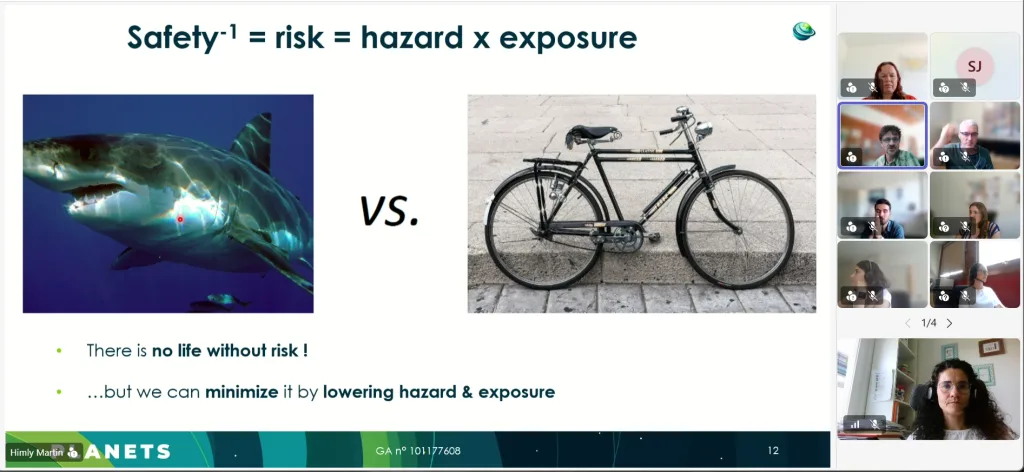
Martin Himly (PLUS), leader of the training work package within PLANETS, started the training session with a recap of the first session of this series (see Session 1 here), reinforcing the concepts of hazard, exposure, and risk, and introducing the transition from qualitative Tier 1 screening to semi-quantitative Tier 2 assessment, characteristic of the intermediate assessment stage. He explained that Tier 2 relies heavily on computational models, existing databases, and New Approach Methodologies (NAMs) to efficiently fill data gaps before considering higher-tier experimental testing. The session emphasised that hazard and exposure assessments follow a tiered and iterative process, in which substances identified as problematic can be redesigned and reassessed.
Szymon Zsybel and Anita Sosnowska (QSAR Lab) discussed in silico methods for hazard assessment, as well as their regulatory aspects (i.e. the regulatory use of in silico hazard assessment), covering also relevant OECD guidelines and EC JRC recommendations for hazard assessment.
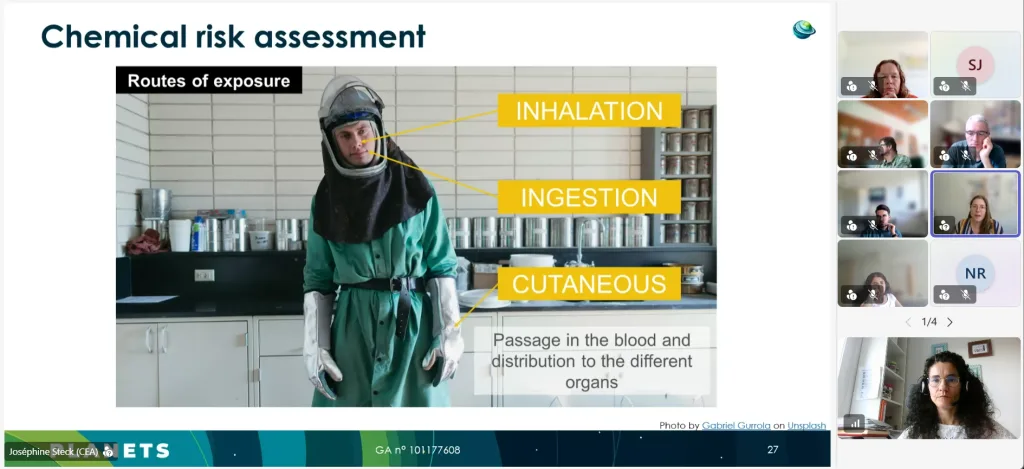
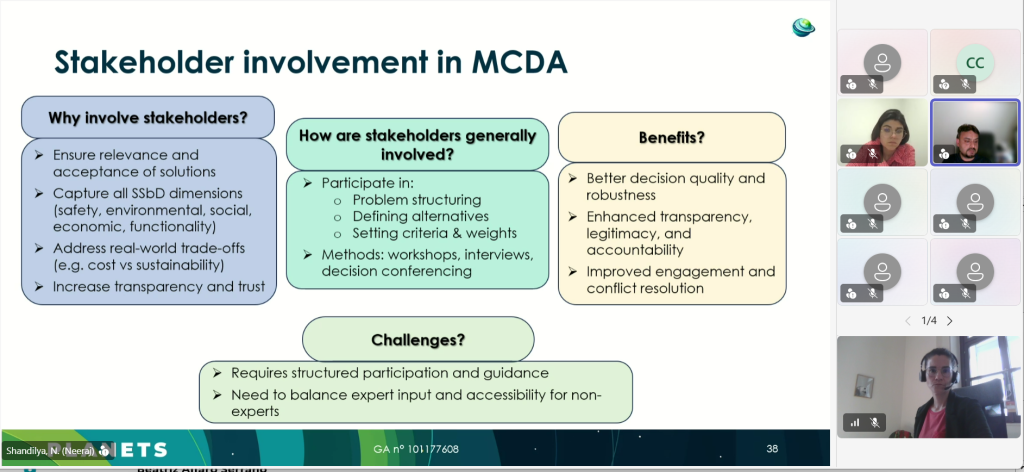
Neeraj Shandilya dived into exposure modelling, explaining why exposure assessment matters (as there is no risk if there is only a hazard and no exposure), and outlining the information an exposure assessment provides. He also covered exposure pathways, i.e. the routes by which chemicals enter the human body, and (exposed) populations (since not everyone is exposed in the same way), providing some examples of exposure scenarios and their contributing factors. He described the exposure assessment workflow and in silico exposure models, describing what they are and why they are used. He also presented some tools for performing exposure assessments, explaining when to use each one depending on the exposure scenario (e.g., Stoffenmanager, ECETOC TRA, EUSES, USEtox).
Poornima Nagesh (Radboud University) continued with exposure modelling, moving towards environmental exposure. She introduced the main fate and transport processes and showed how these are used to assess environmental exposure and impacts. She also explained how the USEtox tool can be used to assess the potential environmental and human health impacts of chemicals.
Philipp Demuth (BASF) introduced toxicokinetics (the fate of a substance in the human body, what the body does with a substance) and toxicodynamics (the effect of a substance on the human body) to explain how external exposure relates to internal (inside of the human body) exposure. He also explained how to relate the two using PBTK (Physiologically Based Toxicokinetic) modelling, which translates external exposure into internal concentrations through ADME (absorption, distribution, metabolism and excretion) processes. This enables reverse dosimetry and in vitro to in vivo extrapolation (IVIVE). He also explained the input and output parameters, different PBTK models (bottom-up pharmaceutical vs. generic PBTK models), parameterisation of PBTK models, and their representation using concentration-time curves. He provided insight into a publicly accessible PBTK model called Integrated Chemical Environment, which is provided by the National Toxicology Program of from the US Department of Health and Human Services, and explained how to use the model, introduce parameters, and analyse its outcome: the plasma-concentration-time curves.
Next, Mario Wenger (PLUS) discussed the migration (degradation) and release of substances and how to determine them, using examples of food contact materials and medical devices to illustrate how to estimate chemical transfer and resulting exposure.
Finally, Ayse Ay (BASF) focussed on in chemico NAMs (New Approach Methodologies) for hazard assessment, to estimate and measure the activity of the chemical substances leakages as alternative to animal testing. She provided insight into advantages and limitations of in chemico approaches in toxicity prediction, and talked about process-related safety assessments to address the accidental release of chemical substances and reduce potential hazards. She also presented tools for carrying out such type of assessments.
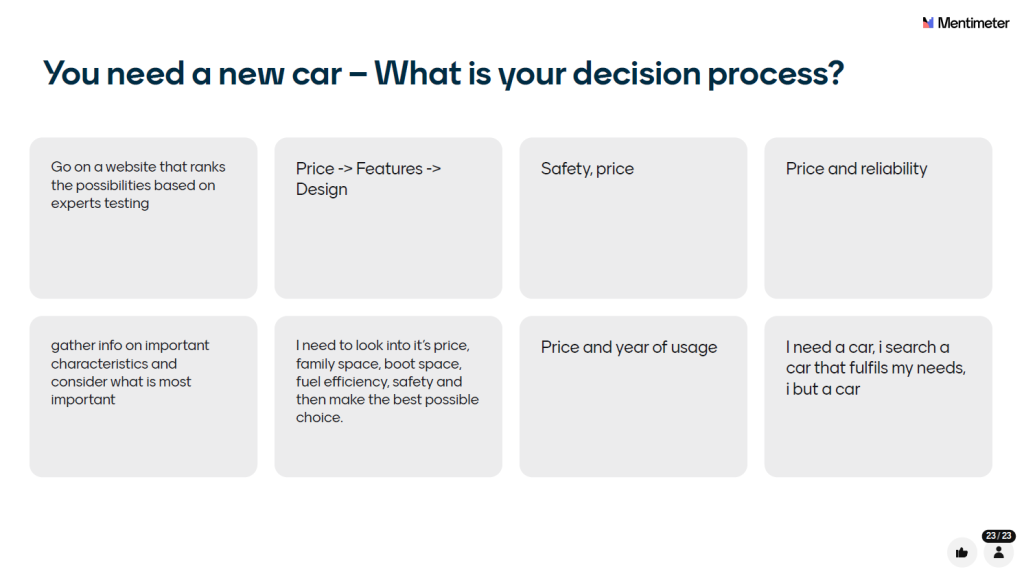
The training also offered several simple, interactive exercises, involving the audience (using Mentimeter), to test their knowledge of concepts learned during the training session.
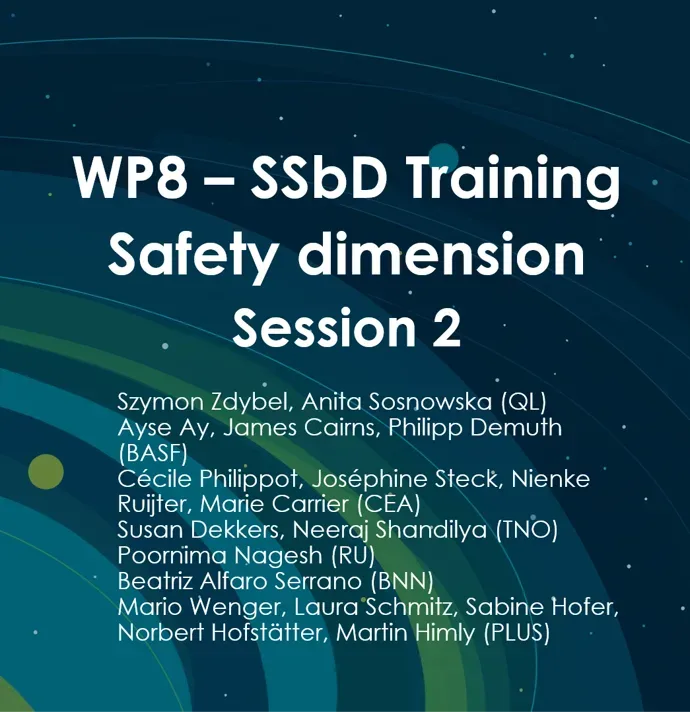
The following PLANETS partners were involved in the preparation of this training: Szymon Zdybel, Anita Sosnowska (QSAR Lab), Ayse Ay, James Cairns, Philipp Demuth (BASF), Cécile Philippot, Joséphine Steck, Nienke Ruijter, Marie Carrier (CEA), Susan Dekkers, Neeraj Shandilya (TNO), Poornima Nagesh (Radboud University), Beatriz Alfaro Serrano (BNN), and Mario Wenger, Sabine Hofer, Norbert Hofstätter, and Martin Himly (PLUS).
Training Materials – In preparation
Building on insights gained from this internal training session, PLANETS has developed external training materials for this second session of the Safety dimension of SSbD training series. These materials include:
- Training materials: Presentation slides & summary of the session
- Recording of the training session
All training materials are available in the PLANETS community on Zenodo under a Creative Commons Attribution 4.0 International licence, which allows for redistribution and reuse with proper credit to the creators. You can access them here, with DOI: 10.5281/zenodo.22874888.
Additionally, all recorded sessions can be viewed on the PLANETS YouTube channel.