logotype
  • Project
    • About PLANETS
    • Objectives
  • Applications
    • Surfactants
    • Flame retardants
    • Plasticizers
  • Partners
  • Collaborations
  • Resources
  • News
  • Contact
Linkedin
logotype
  • Project
    • About PLANETS
    • Objectives
  • Applications
    • Surfactants
    • Flame retardants
    • Plasticizers
  • Partners
  • Collaborations
  • Resources
  • News
  • Contact
Linkedin
  • Project
    • About PLANETS
    • Objectives
  • Applications
    • Surfactants
    • Flame retardants
    • Plasticizers
  • Partners
  • Collaborations
  • Resources
  • News
  • Contact
logotype
  • Project
    • About PLANETS
    • Objectives
  • Applications
    • Surfactants
    • Flame retardants
    • Plasticizers
  • Partners
  • Collaborations
  • Resources
  • News
  • Contact
News
HomeNewsPage 3

Category: News

SSbDworkshop-Highschool
News
July 4, 2025

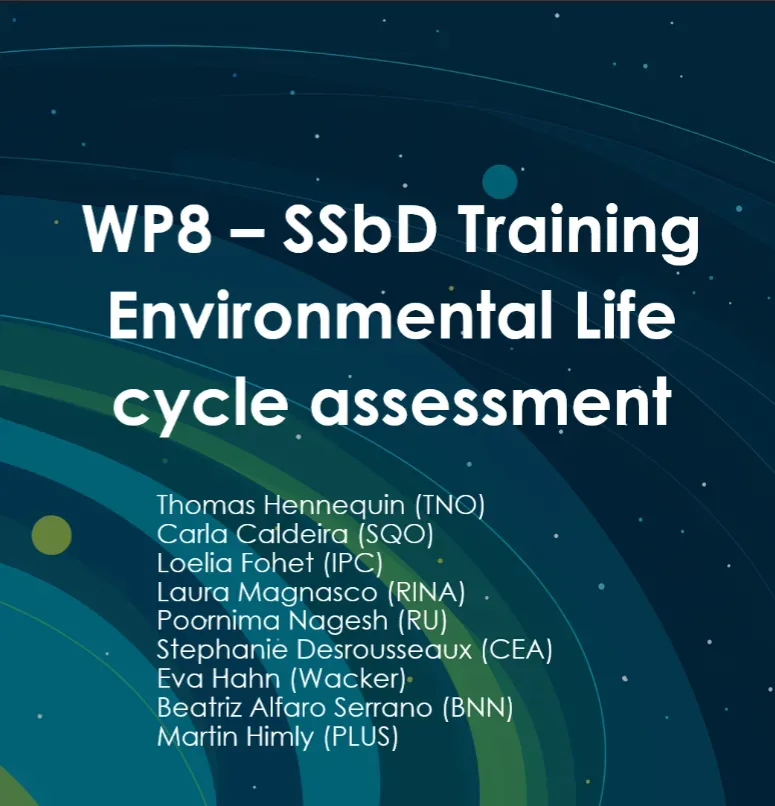
Bringing SSbD closer to the next generation: SSbD workshop for high-school students

On 16 June 2025, Andreas Falk from BNN had the great pleasure of leading a workshop on Safe-and-Sustainable-by-Design (SSbD) for high school students at HTBLA Kaindorf in Austria.

After setting the stage about the three pillars of sustainability, the three dimensions of SSbD, its indicators and 5 steps, as a real-life SSbD implementation example Andreas introduced the case studies of the PLANETS project, which is developing safer and more sustainable alternatives for chemicals with surfactant, flame retardant or plasticising functionalities. All three of these chemical classes have a large chemical-market share, highlighting the importance of research and EU-funded projects for improving chemicals that affect our daily lives.

Many teenagers in the audience will be the engineers and scientists of tomorrow, future professionals who will play a big role for reaching the EU’s aim to become climate-neutral by 2050. With this in mind, the engagement of workshop’s participants in performing a practical exercise of Tier 1 SSbD assessment of an everyday consumer product assured us that, if we invest in educating our young people, we can shape the health of people and planet in the future!

StartSlide4
News
June 30, 2025

Recap of the NSC workshop on “SSbD scenarios for advanced and incremental innovations” on 23 June 2025

On 23 June 2025, the NSC Working Group on Safe and Sustainable by Design (SSbD), Innovation & Regulation organised an online workshop on “SSbD scenarios for advanced and incremental innovations” as a collaboration effort among several EU-funded projects: AlChemiSSts, DESIDERATA, PLANETS and SUNRISE. 

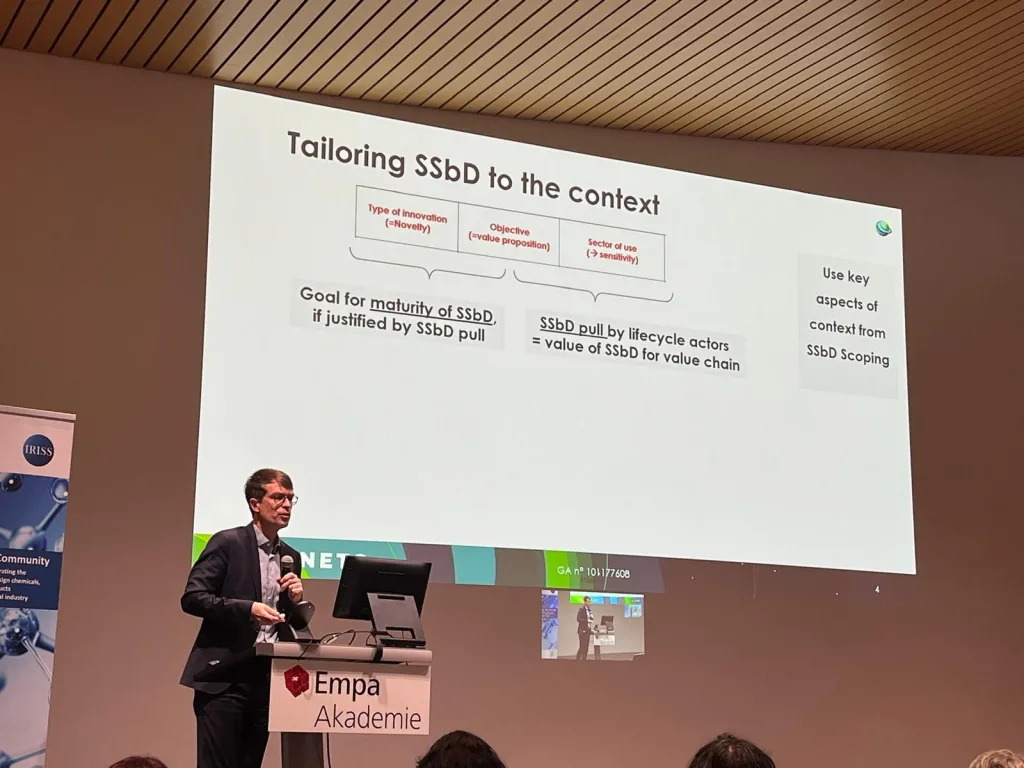
Not all innovation scenarios in SMEs and industry are the same. Current JRC SSbD guidance and also the Portfolio Sustainability Assessment (PSA) / Cefic concepts leave room for tailoring the SSbD approach within a tiered framework. Scenarios support the tailoring, such that SSbD is not just another burden, but increases overall competitiveness. 

But how should a SSbD scenario be described? This was exactly the aim of this first workshop.  

The workshop tested aspects that described a scenario by knowledge that is available at early innovation stages withreal-world cases kindly provided by innovators from the projects AlChemiSSts, DESIDERATA, PLANETS and SUNRISE. Shortlisted aspects included the professional environment (start-up, SME or industry), the sector of application (B2B vs B2C), the innovative height (incremental or advanced), R&D project budget, and other aspects that would be known to the innovator before starting any lab work.

Agenda of the NSC workshop on SSbD scenarios on 23 June 2025

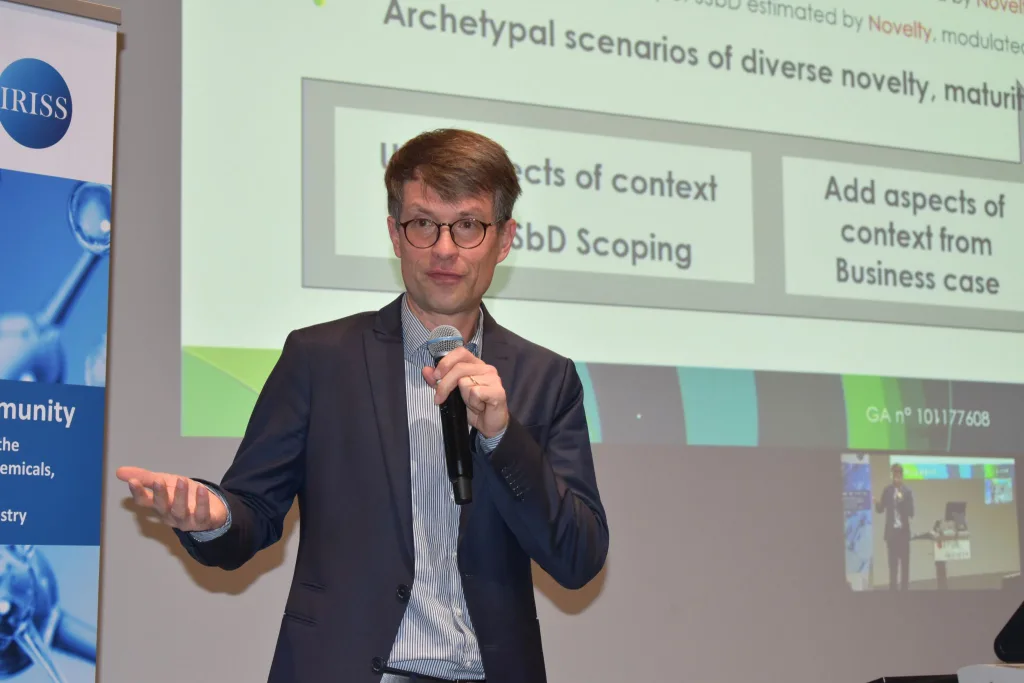
Danail Hristozov (Green Decision, and chair of the NSC WG on SSbD) opened the workshop and welcomed the more than 60 international participants from academia (56%), large industry (19%), SME (8%), consultants (11%), regulators (3%) and EU institutions (3%). Irantzu Garmendia Aguirre (European Commission Joint Research Center (JRC)), gave JRC’s point of view in her talk on the Safe and Sustainable by Design (SSbD) Framework: Scenario building with the scoping analysis, where projects with different starting points and different development routes “climb to the summit of SSbD-lead innovation”.

ParticipantsStakeholders
Overview of the participants’ stakeholder groups

Wendel Wohlleben (BASF, and co-chair of the NSC WG on SSbD) presented the concept of the SSbD scenarios, setting the basis for the rest of the workshop, which continued with an introduction by Lya Soeteman-Hernández (RIVM, and co-chair of the NSC WG on SSbD) of the Case Studies break-out groups joined by the participants, where the methodology used in the different case studies was explained and discussed: 

  • AlChemiSSts case study: Cauchos Ruiz Alejos (represented by Mónica Martínez, from AVANZARE), on firefighter soles using safe alternatives to hazardous flame retardant additives 
  • DESIDERATA case study: Anastasia Moschovi, from MONOLITHOS, on geopolymers originating from mining waste as replacement of Aluminum in construction 
  • PLANETS case study: Stefan Haid, from WACKER, on binders for paint (where the surfactant used during synthesis chemical needs to be tailored to avoid byproducts) 
  • SUNRISE case study: Laurentia Technologies (represented by María Rivero García, from ITENE) on post-harvest fruit treatment based on safer microencapsulated oil 

After a short break, Martin Himly (PLUS, and chair of the NSC WG on Training) moderated the joint reporting session of the different breakouts, where feedback was collected for redefining the questions. 

The workshop concluded with Wendel Wohlleben and Carla Caldeira (SYENSQO) summarising the feedback collected and setting the next actions on: 

  • how to use the scenario described by information from SSbD scoping and from the business case collected in the workshop for better tailoring the SSbD assessment; 
  • the need of further work in the clarity of some of the questions used to describe a scenario, based on feedback during the workshop; 
  • the need of involving industrial organisations (beyond those involved in EU-funded projects) in testing the SSbD tailoring via SSbD scenarios; 
  • the need of developing incentives for making industry implement SSbD in their processes; 


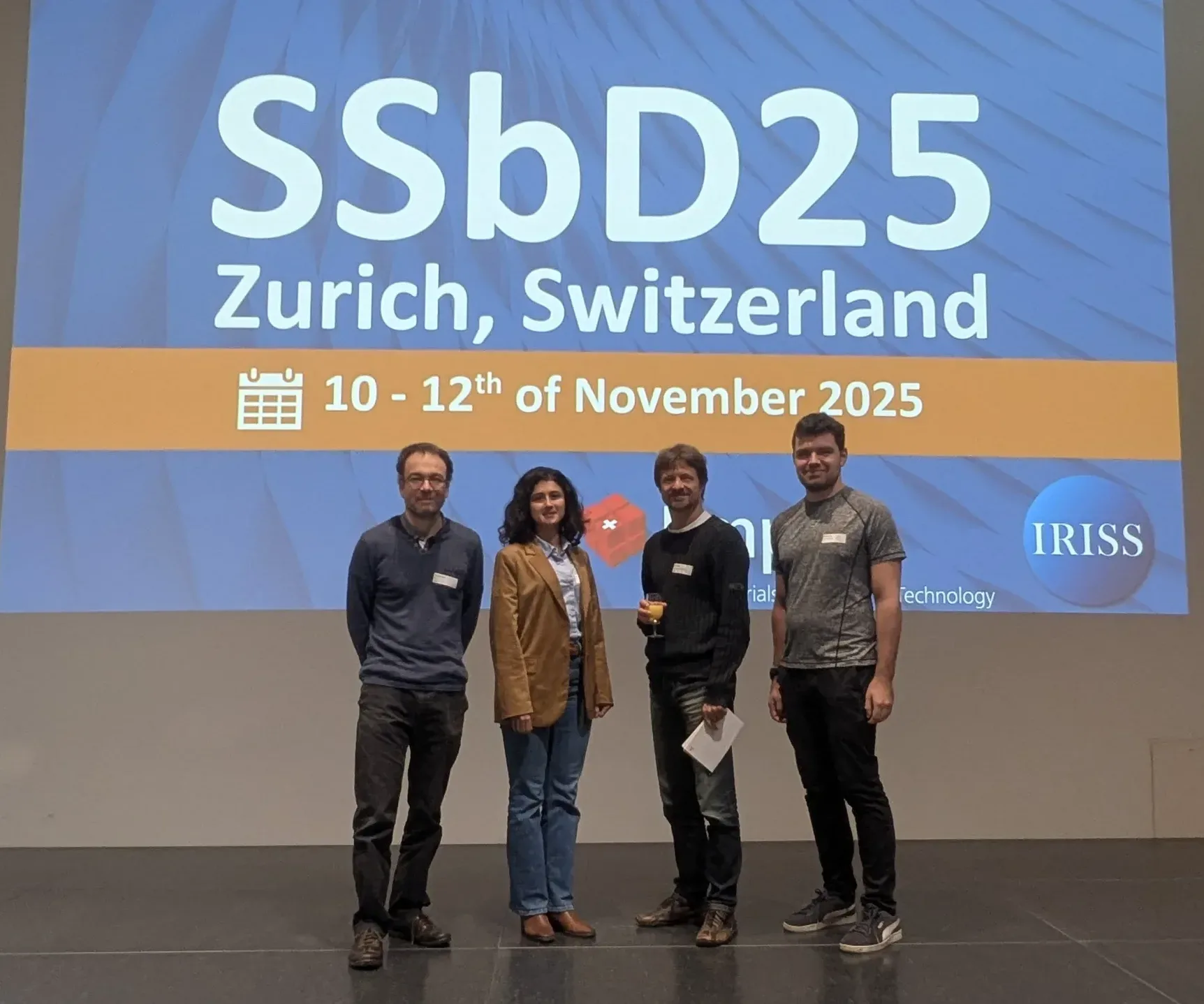
Two main activities are planned as follow-ups of this workshop: A second workshop, in Autumn 2025, distilling “archetypical SSbD scenarios” & their tailored SSbD approaches, and finally, a joint NSC publication on the demonstration by case studies by the involved projects, their SME innovators, industry innovators and SSbD experts. 

Workshop materials:

Workshop materials are publicly available in Zenodo, under DOI: 10.5281/zenodo.15756155.

The recording of the workshop is available in the NSC YouTube channel.

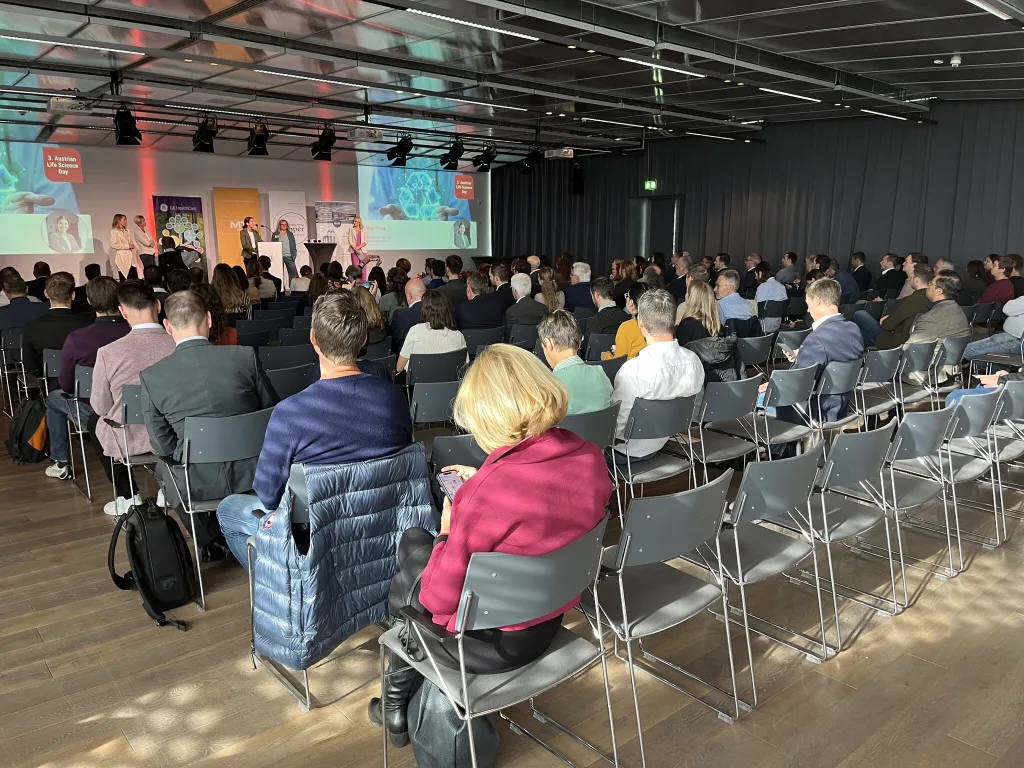
Some impressions of the workshop:
EUIndTech2025-8
News
June 27, 2025

PLANETS @ EUIndTech2025

EUIndTech2025 is the new EU flagship event, in which the two cyclical events, “Conference on Industrial Technologies” and “EuroNanoForum” are merged. This year it was done during the Polish presidency of the EU Council in Krakow, Poland. The EUIndTech2025 brought together more than 800 stakeholders from academia, research organizations, industry, NGOs and policymakers to discuss the state-of-the-art technologies, challenges and trends. 

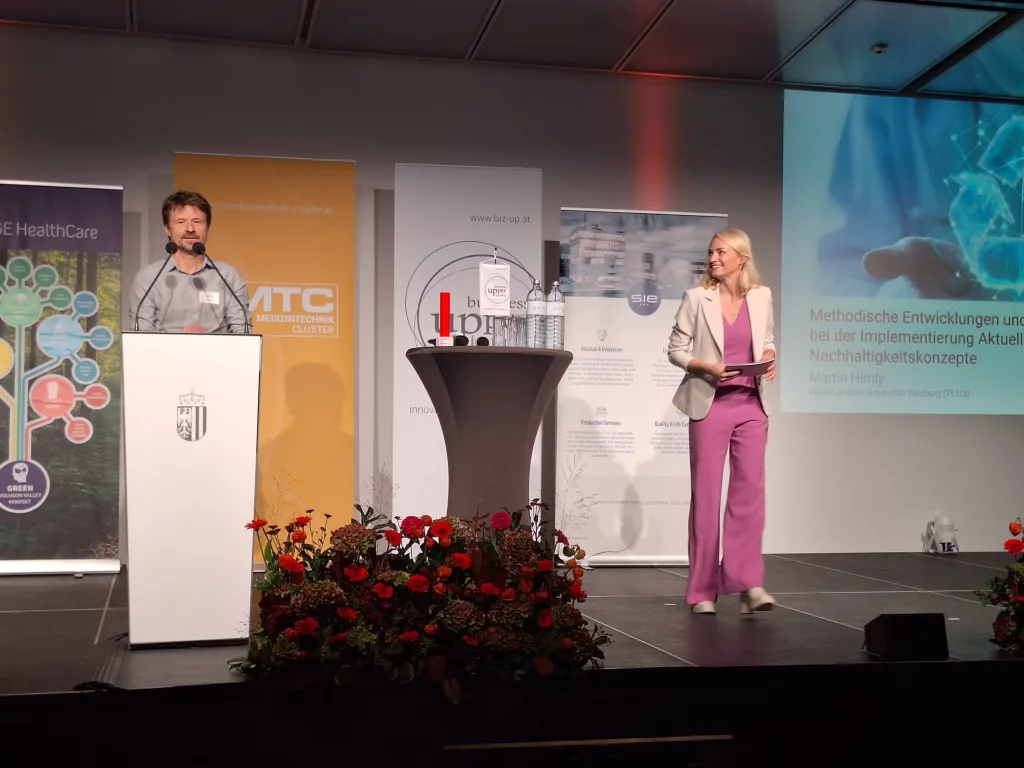
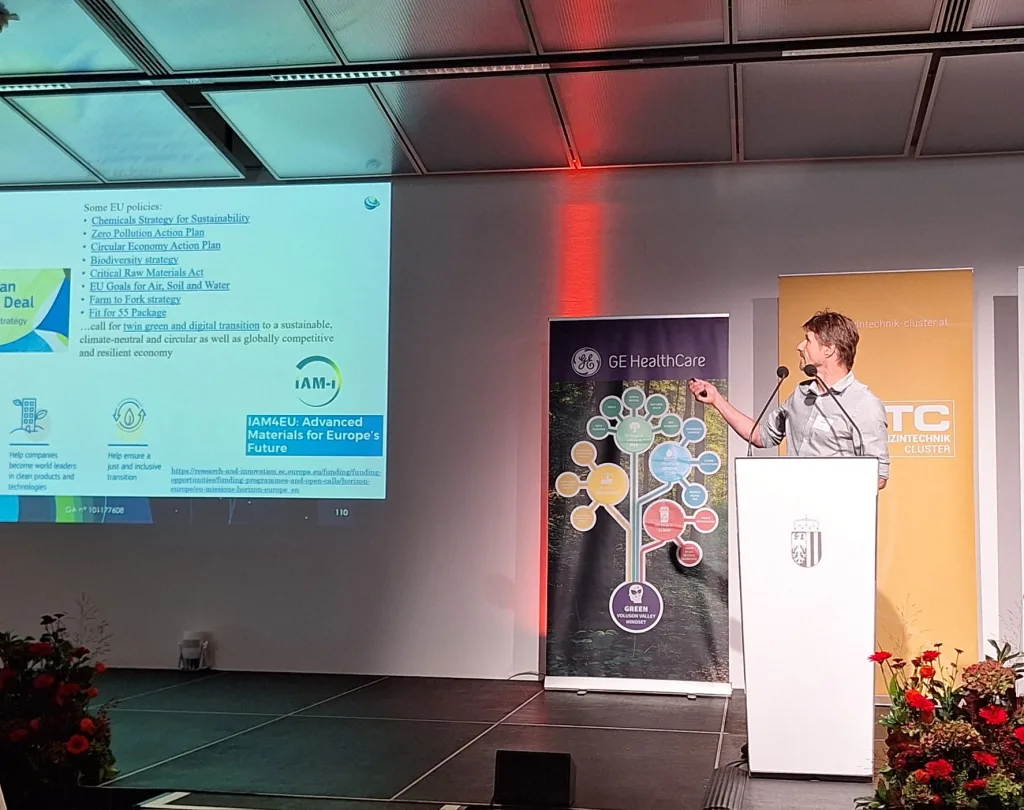
BNN’s CEO Andreas Falk in his role as part of NSC’s coordination team and as partner in PLANETS, organised a NSC Session, having Prof. Martin Himly (PLUS) (chair of the NSC Working Group on Education and partner in PLANETS) as moderator and Prof. Eva Valsami-Jones (UoB) (member of NSC’s Coordination Team) as speakers in key roles of the session. Together with other members of the NSC and further stakeholders they were on stage at EUIndTech25 for the NSC-session entitled “Designing Safe and Sustainable Materials and Chemicals – SSbD Implementation and Digitalization” on June 2nd, 2025. 

The NSC session addressed the importance of integrated approaches, data-related expectations, advantages and challenges for ultimately balancing ecological, societal, and economic goals for a more sustainable future. The session was moderated by Martin Himly with oral presentations given by Eugenia Valsami-Jones, Andreas Künkel (BASF) and Garbine Guiu Etxeberria (EC, DG RTD). For the panel discussion the speakers were joined by Andreas Falk, Daniel Hubert (VisterNova), Peter Klein (FhG) and Mary B. Walsh (Honeywell).  

As a follow-up of the discussions during the session, the panellists formulated 3 paragraphs as output of the session, which will be part of the Malopolska Declaration. 

Output of the NSC session feeding into the Malopolska Declaration:  

Safe-and-Sustainable-by-Design (SSbD)-guided innovation of materials and chemicals represents an essential requirement for any future product entering the European market, enabling integration of functional performance, safety and sustainability. Efforts need to be taken to facilitate science-led harmonization of environmental, economic, and societal requirements at early innovation stages. Such well-balanced approaches require a multidisciplinary collaboration further supported by tailored funding, interconnected on regional, national and international level to gain synergies of public investment. 

Interoperable digitally enabled workflows covering entire value chains serving various sectors are needed. Performance indicators are required to be included in SSbD digitalization to foster and speed-up the uptake of innovative advanced materials in industrial production. Efforts need to be taken to improve data quality and metadata completeness to increase the reliability of predictions and generate greater acceptance and trust. 

Upon SSbD implementation, focus shall be on solution-oriented approaches that need to include communication between all stakeholders. Market-focused incentives for SSbD implementation need to be established within the EU to generate employment and economic growth as part of the green deal in Europe and later globally. 


NSC members highlighted during the NSC session the work done within the NSC projects, PLANETS among others, to a very engaged audience in Krakow.

PLANETS @ EUIndTech2025
PLANETS was included in the latest BNN QUARTERLY 02/2025
News
June 20, 2025

PLANETS featured in BNN QUARTERLY (June 2025)

PLANETS was included in the latest BNN QUARTERLY 02/2025 entitled “Digital Transition for Innovative Technologies” with four articles:

  • Pint of Science brings Technology to the Pub
  • BNN and Members Active at SETAC European Congress
  • PLANETS Strategy for Implementation of SSbD in the Industry journey (page 51)
  • PLANETS Publishes Training Materials on SSbD scoping and Tier 1 Assessments (page 53)

The issue also advertised the upcoming NSC/PLANETS workshop on SSbD scenarios for advanced materials!

Read here
Subscribe to QUARTELY
P_20250513_102109
News
June 6, 2025

PLANETS @ SETAC 2025

From 11-15 May 2025 took place the SETAC 2025, the 35th Annual Meeting of the Society of Environmental Toxicology and Chemistry in Europe, at the Austria Center in Vienna. 

Under the overarching theme “Innovation for Tomorrow: Progress in Safe and Sustainable Concepts”, the conference emphasized the need for integration of cutting-edge innovations with safety and sustainability considerations, through implementation and expansion of the Safe and Sustainable by Design (SSbD) thinking, as well as it application beyond the development of new molecules and products (e.g., also to cities, land use and landscapes). The conference attracted roughly 3000 people to the capital of Austria, from many various stakeholder groups, i.e., academia, industry, innovators, EU institutions, national authorities, etc. 

Several PLANETS partners participated in the conference (CEA, BASF, BNN, AIMEN, TNO, PLUS, Radboud University) and spread the word about PLANETS in their three oral and three poster presentations: 

On Monday, May 12th there were several sessions on SSbD:  

  • Joséphine Steck (CEA) gave an oral presentation in session 6.05 “Implementing Holistic SSbD Approaches to Chemicals and Materials: What Do Academia, Industry, Regulators and Policymakers Propose?”. Under the title “An auto-diagnostic SSbD tool to facilitate the integration of Safe and Sustainable by Design approach in the innovative stage”, Joséphine presented a simplified SSbD evaluation to reduce data needs, time, and expertise, making SSbD more accessible while maintaining its core goals. A three-tiered approach was introduced, and the presentation focused then on the first tier. A questionnaire was developed to compare options across four SSbD dimensions: safety, environment, economy, and social. Users answered simple questions for each dimension, with results providing an overall percentage score, highlighting gaps, and guiding further assessments. This assessment has been tested on molecules, products, and processes within the CLEANHYPRO and PLANETS projects, showing its flexibility as a quick pre-assessment tool. Its main benefit is boosting the agility of research strategies by identifying SSbD gaps and next steps. In higher tiers, expert-driven assessments will dive deeper into each dimension. As outlook, the PLANETS project is refining the tool to better comply with industrial needs. DOI: 10.5281/zenodo.15463692
  • Wendel Wohlleben (BASF) gave an oral presentation also in session 6.05. In his talk entitled “Value creation and tiering: incentives of SSbD integration into industrial innovation projects with LCA and measured safety screenings”, Wendel explored how to convince companies to take up more quantitative SSbD approaches, and how to generate incentives by strong tiering and tailoring the SSbD approach to the specific scenario. The topic will be followed up with the entire community in the NSC online workshop on June 23rd. 

On Tuesday, May 13th: 

  • Ayse Ay (BASF) had a poster in the session 6.11 “Flame Retardants Regulatory and Circular Economy Challenges”. Under the title “Safe and Sustainable by Design, Scoping, and Simplified Assessment of Alternative Flame Retardants for Use in Polymer Insulation Foams”, Ayse provided insights into the implementation of SSbD at the molecular formulation level for over 70 flame retardants. She shared results from the Simplified Assessment Questionnaire for key alternative flame retardants in each insulation foam class, highlighting the questionnaire’s discriminatory power and limitations. 
  • Matiss Reinfelds (BNN) had a poster in the Session 6.05 “Implementing Holistic SSbD Approaches to Chemicals and Materials: What Do Academia, Industry, Regulators and Policymakers Propose?” on “Redesigning for the Future: Applying Safe and Sustainable by Design (SSbD) Principles in High-Impact Chemical Industries” with results from our project PLANETS. The poster served as basis for the discussion on SSbD implementation in an industrial setting. The poster is publicly available under DOI: 10.5281/zenodo.15463912. 

On Wednesday, May 14th, the focus turned to science communication in the session 6.06  “Communication for Tomorrow: From Experimental Design Towards Societal Impact” with an oral presentation from BNN’s Caitlin Ahern. Under the title “Getting Beyond the Bubble: Measuring Effectiveness of Outreach Activities for SSbD-Related EU Projects”, Caitlin assessed social media activities to reach out to a wider community, presenting PLANETS as an example of successful practices. DOI: 10.5281/zenodo.17619612.

On Thursday May 15th, Asif Pasha Mohammed (AIMEN) had a poster entitled “Digital Product Passports for Improved Consumer Transparency and Health Impact Awareness”, in the session 1.06 “Data-Driven Toxicology: Practical Applications and Insights into Using Existing and Emerging Data in Support of Human and Environmental Health”. In his poster, Asif highlighted how Digital Product Passports improve consumer engagement through transparent, health-focused data. It emphasizes the importance of standardized, interoperable systems for real-time decision-making. Integrating trusted sources like ECHA/REACH builds consumer confidence and supports safer product choices. 

Additionally, task 2.3 was kicked-off in Vienna, having the Prater as an inspiring location for great discussions in the internal meeting! 

Below some impressions of the SETAC25 including a video! 

You are currently viewing a placeholder content from YouTube. To access the actual content, click the button below. Please note that doing so will share data with third-party providers.

More Information
Unblock content Accept required service and unblock content
IMG_20250522_102249
News
June 2, 2025

PLANETS @ Foam Technology Days 2025

The 2nd edition of the Foam Technology Days took place from 21 to 22 May 2025 in Pfinztal, Germany, focusing on particle and extrusion foam technologies with a special emphasis on recycling. Organised by our colleagues from Fraunhofer ICT, the event gathered around 60 participants from across the international foam industry — including material producers, machine manufacturers, processors, and end users — as well as academics.

Experts from Borealis, KraussMaffei Extrusion, BEWI, Ruch Novaplast, Steinbacher Dämmstoff, Fraunhofer ICT and other companies reported on their professional practice and shared their experiences in the industrial application of foam technology. Their contributions highlighted the sector’s shift towards sustainability and circularity.

Participants also had the opportunity to explore the Fraunhofer ICT labs and pilot plants during an on-site tour, getting insight into their ongoing research, including efforts to map the entire recycling chain from rePS (recycled polystyrene) to rEPS (recycled expanded polystyrene) and rXPS (recycled extruded polystyrene).

PLANETS was also present at the event, with an oral presentation by Herbert Scharnagl from Steinbacher Dämmstoff GmbH, titled “From Waste to Value: The Path to Greener LDPE Insulation”, presenting among others the project and their involvement in the flame retardants case study.

The Foam Technology Days once again proved to be an invaluable platform for knowledge exchange, showcasing innovations that are shaping a more sustainable future for foam materials.

IPC virtual tour
News
May 29, 2025

Visit all the IPC sites virtually!

PLANETS partner Industrial Technical Center for Plastics and Composites (IPC) plays a key role in promoting innovation in plastics and composite materials and processes. With its expertise and nationwide network of experts, IPC actively supports industrial companies in a wide range of fields.  

Within PLANETS, IPC leads the work package seeking SSbD alternatives for plasticizer application, and contributes to other work packages as SSbD expert.  

It counts 167 collaborators distributed on 5 sites in France, who work on different activities including circular economy with LCA, Recycling and Plastics safety.  

IPC provides us with an all-access view of their 5 sites in France with virtual tours.

Take a look
PLANETS SSbD Graphic
News
May 28, 2025

PLANETS strategy for implementation of SSbD in the Industry journey

PLANETS aims to encourage the careful development of new alternatives in chemicals, products and processes to ensure safety and sustainability throughout their entire life cycle, achieving buy-in from a variety of stakeholders along the way.  

To achieve these objectives, PLANETS is based not only on the SSbD framework[1]  promoted by the JRC and the European Commission, but also on industry initiatives such as the WBCSD PSA v2.0[2]  and the CEFIC guideline[3]. By combining these perspectives, PLANETS aims to strengthen the integration of SSbD from the early stages of development, ensuring global acceptance and facilitating smoother implementation. The cornerstone of the PLANETS methodology is the synergy between SSbD experts and industry partners. Throughout the project’s lifecycle, industrial development will be followed by SSbD assessments, which will evolve in complexity to align with the maturity of the alternatives.

This support is reflected in the implementation of the PLANETS workflow, which integrates industrial challenges with the SSbD methodology, ensuring alignment between the increasing maturity of alternatives and the need for SSbD assessments. The PLANETS workflow covers all five SSbD dimensions (Hazard, Exposure, Environmental, Economic, and Social) and tailors the expertise to the specific needs of each case study (Surfactants, Flame Retardants, and Plasticizers), from the early stages through to final use, including end-of-life/recycling. Another key feature of the PLANETS workflow is its tiered approach, which aligns the maturity of alternatives with the data requirements for SSbD assessments.

At an early stage, the simplified tier assessment plays an important role and provides the basis for identifying potential impacts and risks. This allows designers to address key sustainability and safety issues before they become embedded in the design. However, the impact of simplified evaluations is limited by the lack of detailed data, which can make it challenging to assess the full extent of safety, environmental, economic, and social impacts.

As the design progresses, intermediate and full tiers evaluations become more detailed and provide a clearer understanding of these impacts. While simplified tier provides flexibility to address broad concerns, the increasing availability of data in later tiers allows for more precise and effective impact assessments. The trade-off is that early evaluations, while impactful, are constrained by the lack of comprehensive information, which can sometimes hinder the depth of the assessment. Thus, the increasing flexibility in later tiers increases the ability to mitigate risks more effectively as data becomes more robust and specific.

The flexibility within this tiered approach allows for continuous refinement as new data becomes available or as the design evolves. As the assessment progresses through the tiers, potential impacts are better understood and mitigated, ensuring that sustainability and safety goals are met without compromising the overall design evolution.

Finally, for PLANETS, the key to the successful implementation of the SSbD strategy in the industrial pathway lies in the complementarity between SSbD experts and industrial partners. This collaboration will foster a better understanding of the challenges to be addressed through a step-by-step approach that aligns with ongoing developments, ensuring a level of agility throughout the process.


[1] https://research-and-innovation.ec.europa.eu/research-area/industrial-research-and-innovation/chemicals-and-advanced-materials/safe-and-sustainable-design_en

[2] https://www.wbcsd.org/resources/portfolio-sustainability-assessment-v2-0/

[3] https://cefic.org/a-solution-provider-for-sustainability/safe-and-sustainable-by-design/


Pint of Science Main image
News
May 27, 2025

PLANETS @ Pint of Science 2025

The international festival Pint of Science has been bringing scientific talks to pubs across Europe for over a decade. Each year, on three consecutive evenings in May, people have a chance to listen to fun scientific talks in their local bars.

This year, Pint of Science in Graz hosted 9 events in 3 locations – Bar28, Mi Casa, and Ducks Coffee Shop – from 19-21 May 2025. BNN was proud to host the topic “Tech Me Out” at Bar28 on the final evening. Moderated by Caitlin Ahern, the event linked safety and sustainability of new technologies, BNN’s guiding mission, to the topics of the invited speakers and, among others, our PLANETS project.

The event sold out and the audience had the opportunity to ask questions and participate in a quiz. Thank you to the Pint of Science, all of whom are volunteers, for this opportunity of bringing science closer to not science experts!

C4Rinitiative
News
May 8, 2025

Kicking off the Collab4Resilience (C4R) initiative

Early April 2025, on 08.04.2025, kicked off the new Collab4Resilience (C4R) iniciative, as a joining effort of the EU-funded projects in advanced materials and nanoscience.

  • 1
  • 2
  • 3
  • 4

Contact

Plasticizers, fLame–retardants and surfactANts: new alternatives validating the safE and susTainable by deSign approach 

  • info@project-planets.eu

Helpful links

Downloads
Legal Notice
Privacy Policy
EN_FundedbytheEU_RGB_WHITE Outline

This project received funding from the European Union’s Horizon Europe research and innovation programme under grant agreement n° 101177608. Views and opinions expressed are however those of the author(s) only and do not necessarily reflect those of the European Union. Neither the European Union nor the granting authority can be held responsible for them.


PLANETS is a member of NSC.

back to top