logotype
  • Project
    • About PLANETS
    • Objectives
  • Applications
    • Surfactants
    • Flame retardants
    • Plasticizers
  • Partners
  • Collaborations
  • Resources
  • News
  • Contact
Linkedin
logotype
  • Project
    • About PLANETS
    • Objectives
  • Applications
    • Surfactants
    • Flame retardants
    • Plasticizers
  • Partners
  • Collaborations
  • Resources
  • News
  • Contact
Linkedin
  • Project
    • About PLANETS
    • Objectives
  • Applications
    • Surfactants
    • Flame retardants
    • Plasticizers
  • Partners
  • Collaborations
  • Resources
  • News
  • Contact
logotype
  • Project
    • About PLANETS
    • Objectives
  • Applications
    • Surfactants
    • Flame retardants
    • Plasticizers
  • Partners
  • Collaborations
  • Resources
  • News
  • Contact
ssbd TAG
HomePosts Tagged "ssbd"

Tag: ssbd

PLANETS_SSbDTraining_SafetyDimension2_CoverSmall
News
September 2, 2026

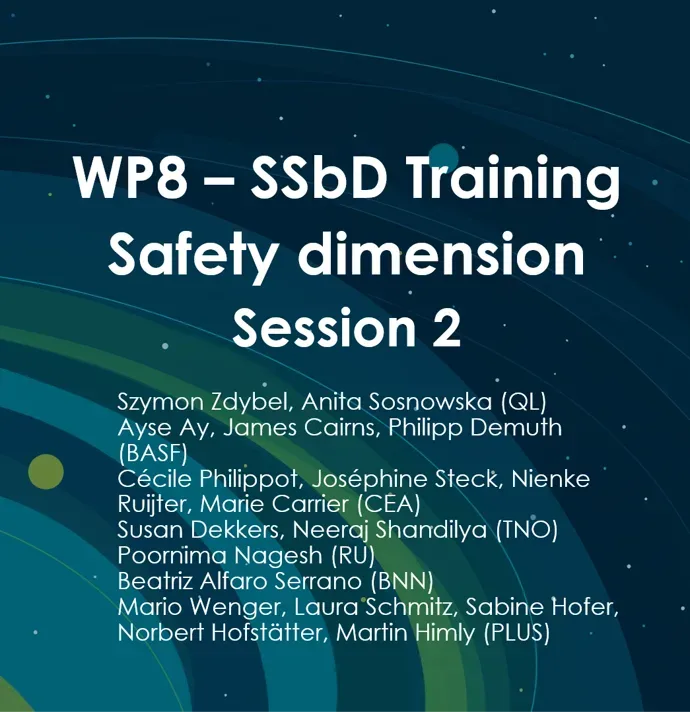
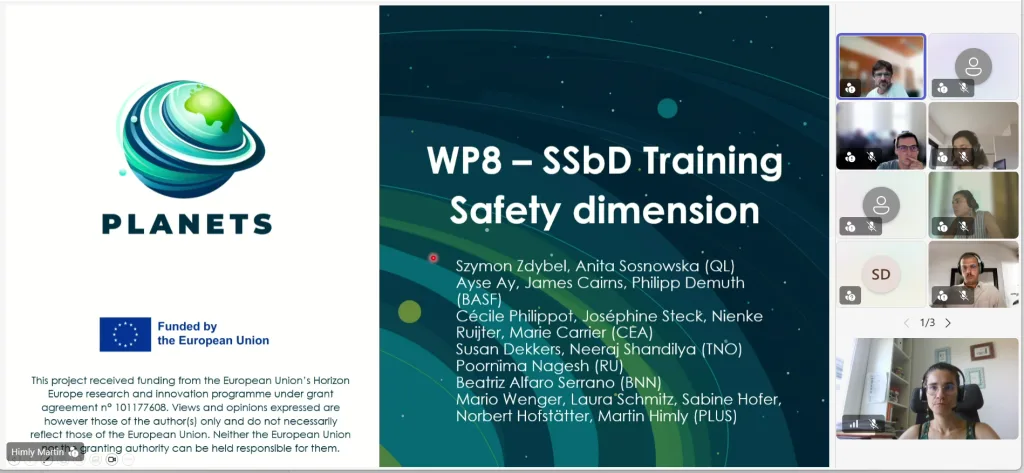
Recap of the PLANETS SSbD Training on the Safety dimension – Session 2 (26.06.2026, online)

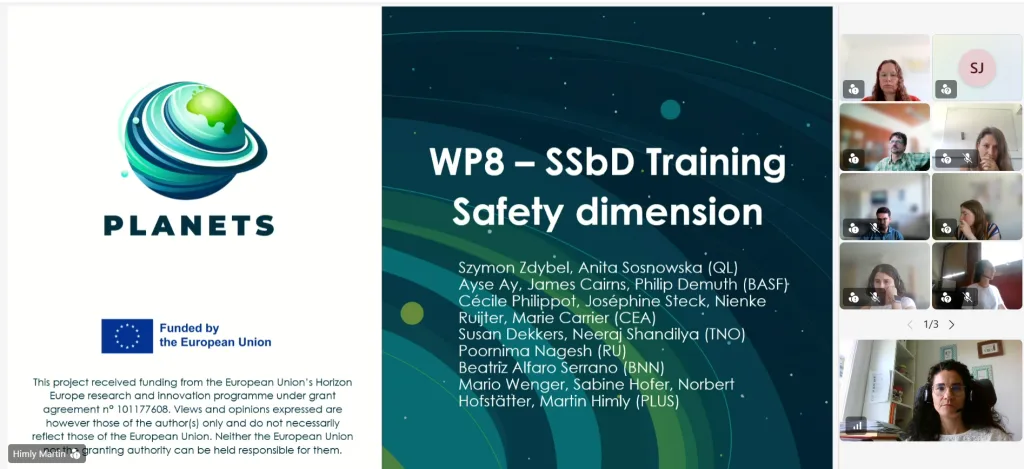
On 26 June 2026, the PLANETS consortium organised the second virtual internal training session on the Safety Dimension of Safe-and-Sustainable-by-Design (SSbD). This second training of the series of trainings in this topic began with a recap of the Session 1 (see Session 1 here), providing context for the audience and giving some basic background on the safety dimension in SSbD, as well as its aims. Session 2 focused on Tier 2 Safety Assessment, introducing computational methods for hazard, exposure, toxicokinetics, migration, and process safety within the SSbD framework.


Highlights of the workshop

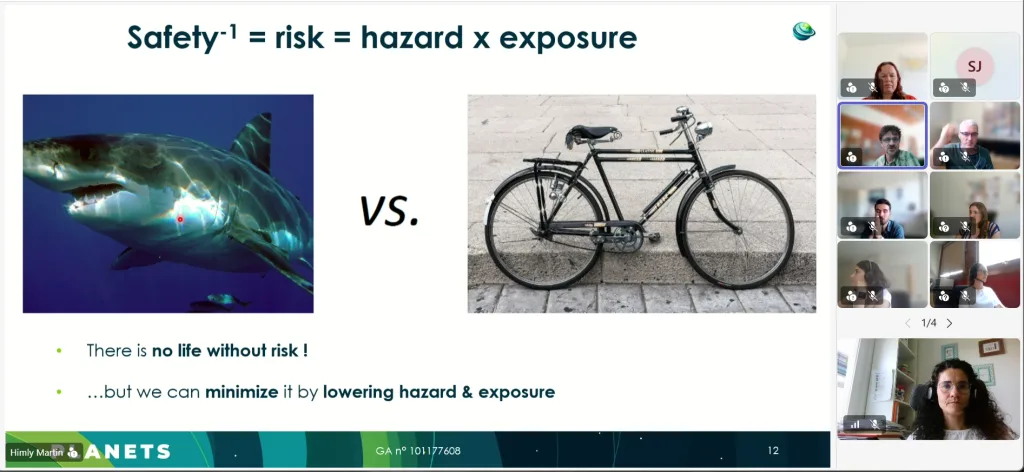
Martin Himly (PLUS), leader of the training work package within PLANETS, started the training session with a recap of the first session of this series (see Session 1 here), reinforcing the concepts of hazard, exposure, and risk, and introducing the transition from qualitative Tier 1 screening to semi-quantitative Tier 2 assessment, characteristic of the intermediate assessment stage. He explained that Tier 2 relies heavily on computational models, existing databases, and New Approach Methodologies (NAMs) to efficiently fill data gaps before considering higher-tier experimental testing. The session emphasised that hazard and exposure assessments follow a tiered and iterative process, in which substances identified as problematic can be redesigned and reassessed.

Szymon Zsybel and Anita Sosnowska (QSAR Lab) discussed in silico methods for hazard assessment, as well as their regulatory aspects (i.e. the regulatory use of in silico hazard assessment), covering also relevant OECD guidelines and EC JRC recommendations for hazard assessment.

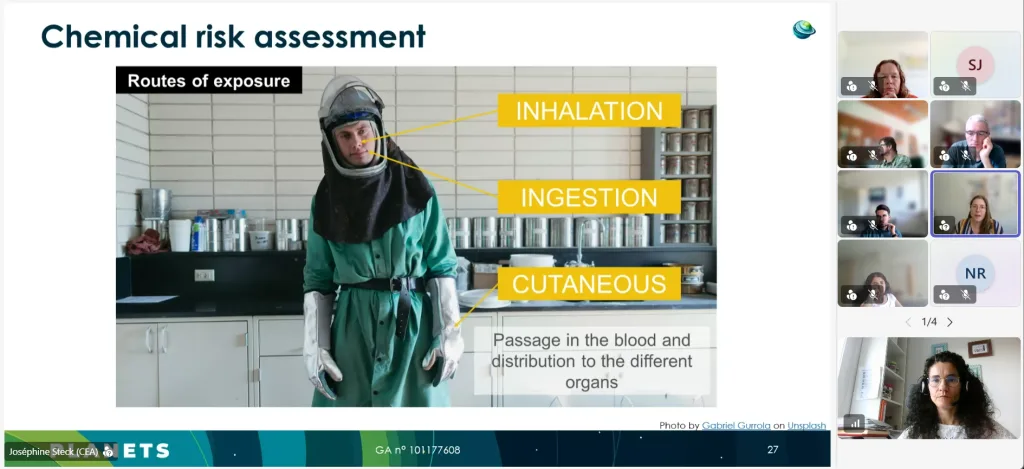
Neeraj Shandilya dived into exposure modelling, explaining why exposure assessment matters (as there is no risk if there is only a hazard and no exposure), and outlining the information an exposure assessment provides. He also covered exposure pathways, i.e. the routes by which chemicals enter the human body, and (exposed) populations (since not everyone is exposed in the same way), providing some examples of exposure scenarios and their contributing factors. He described the exposure assessment workflow and in silico exposure models, describing what they are and why they are used. He also presented some tools for performing exposure assessments, explaining when to use each one depending on the exposure scenario (e.g., Stoffenmanager, ECETOC TRA, EUSES, USEtox).

Poornima Nagesh (Radboud University) continued with exposure modelling, moving towards environmental exposure. She introduced the main fate and transport processes and showed how these are used to assess environmental exposure and impacts. She also explained how the USEtox tool can be used to assess the potential environmental and human health impacts of chemicals.

Philipp Demuth (BASF) introduced toxicokinetics (the fate of a substance in the human body, what the body does with a substance) and toxicodynamics (the effect of a substance on the human body) to explain how external exposure relates to internal (inside of the human body) exposure. He also explained how to relate the two using PBTK (Physiologically Based Toxicokinetic) modelling, which translates external exposure into internal concentrations through ADME (absorption, distribution, metabolism and excretion) processes. This enables reverse dosimetry and in vitro to in vivo extrapolation (IVIVE). He also explained the input and output parameters, different PBTK models (bottom-up pharmaceutical vs. generic PBTK models), parameterisation of PBTK models, and their representation using concentration-time curves. He provided insight into a publicly accessible PBTK model called Integrated Chemical Environment, which is provided by the National Toxicology Program of from the US Department of Health and Human Services, and explained how to use the model, introduce parameters, and analyse its outcome: the plasma-concentration-time curves.

Next, Mario Wenger (PLUS) discussed the migration (degradation) and release of substances and how to determine them, using examples of food contact materials and medical devices to illustrate how to estimate chemical transfer and resulting exposure.

Finally, Ayse Ay (BASF) focussed on in chemico NAMs (New Approach Methodologies) for hazard assessment, to estimate and measure the activity of the chemical substances leakages as alternative to animal testing. She provided insight into advantages and limitations of in chemico approaches in toxicity prediction, and talked about process-related safety assessments to address the accidental release of chemical substances and reduce potential hazards. She also presented tools for carrying out such type of assessments.

The training also offered several simple, interactive exercises, involving the audience (using Mentimeter), to test their knowledge of concepts learned during the training session.

The following PLANETS partners were involved in the preparation of this training: Szymon Zdybel, Anita Sosnowska (QSAR Lab), Ayse Ay, James Cairns, Philipp Demuth (BASF), Cécile Philippot, Joséphine Steck, Nienke Ruijter, Marie Carrier (CEA), Susan Dekkers, Neeraj Shandilya (TNO), Poornima Nagesh (Radboud University), Beatriz Alfaro Serrano (BNN), and Mario Wenger, Sabine Hofer, Norbert Hofstätter, and Martin Himly (PLUS).

Training Materials – In preparation

Building on insights gained from this internal training session, PLANETS has developed external training materials for this second session of the Safety dimension of SSbD training series. These materials include:

  • Training materials: Presentation slides & summary of the session
  • Recording of the training session

All training materials are available in the PLANETS community on Zenodo under a Creative Commons Attribution 4.0 International licence, which allows for redistribution and reuse with proper credit to the creators. You can access them here, with DOI: 10.5281/zenodo.22874888.

Additionally, all recorded sessions can be viewed on the PLANETS YouTube channel.
Training materials
Watch Recording on Safety - Session 2
PLANETS_SSbDTraining_SafetyDimension2_Screenshot
20260619_SSbD-Training_Safety-Part1_Cover_Small
News
August 24, 2026

Recap of the PLANETS SSbD Training on the Safety dimension – Session 1 (19.06.2026, online)

On 19 June 2026, the PLANETS consortium organised a virtual internal training session on the Safety Dimension within Safe-and-Sustainable-by-Design (SSbD), as the first of a series of trainings in this topic. The session began with basic background on the safety dimension in SSbD, as well as the importance to assess both hazard and exposure. It provided an overview of the safety information provided by safety data sheets of individual materials/substances (MSDS). It navigated through hazard databases, including the Substance Information System (SIS) as an example, as well as grouping and read across approaches. Finally, the training provided insight into the role of regulatory toxicology and toxicologists in their daily praxis.


Highlights of the workshop

Martin Himly (PLUS), leader of the training work package within PLANETS, started the training session by introducing the basics of the safety dimension in SSbD: what is safety, definition of risk, when I am at risk, how exposure determines risk, factors that impact the toxicity of chemicals and materials, and relevant terminology related to safety. He also referred to Paracelsus (1493–1541), a Swiss-Austrian physician and alchemist, widely recognized as the father of toxicology, as he revolutionized the field by shifting the understanding of poisons away from superstition, establishing the foundation of modern chemical therapy and scientific toxicology. The training also offered simple interactive exercises, involving participants (using Mentimeter), to test the knowledge of the audience regarding the interpretation of toxicity of different materials.

Together with Joséphine Steck (CEA), the audience dived into chemical risk assessment and risk mitigation, the general prevention principles to mitigate a risk and the stop principles. This also covered hazard of chemical products, like identification and communication tools, essential elements of MSDS with hazard and precautionary statements, symbols, signal words, etc. The training also introduced the Classification, Labelling and Packaging (CLP) European regulation. Jointly with Cécile Philippot (CEA) and supported by Beatriz Alfaro Serrano (BNN), they guided the participants through an interactive exercise (via Mural) on information content that can be retrieved from MSDS aiming to decide on the most appropriate / less hazardous options from an offered set of paints. This was conducted by using the information provided complemented by the hazard pictograms and the labelling information.

Susan Dekkers (TNO) then introduced the participants to publicly available hazard databases, including the Substance Information System (SIS), explaining why and how to use them, and introducing concepts such as occupational exposure limits, grouping, and read-across approaches for assessing substances.

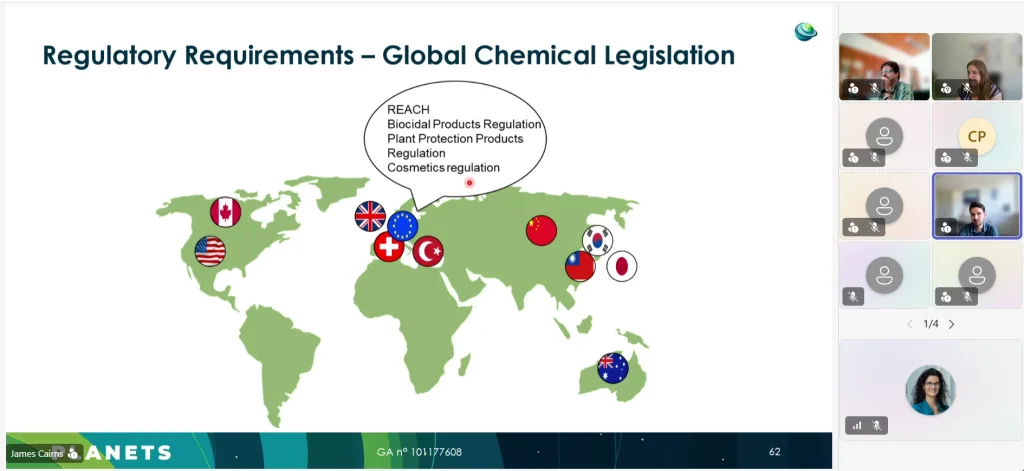
The final part of the training, provided by James Cairns (BASF), focused on the work of regulatory toxicologists in industry, highlighting their role in chemical safety assessments, regulatory compliance, dossier preparation, and the development of testing strategies that support both human health and environmental protection.

The following PLANETS partners are involved in the preparation of the entire Safety training series: Szymon Zdybel, Anita Sosnowska (QSAR Lab), Ayse Ay, James Cairns, Philipp Demuth (BASF), Cécile Philippot, Joséphine Steck, Nienke Ruijter, Marie Carrier (CEA), Susan Dekkers, Neeraj Shandilya (TNO), Poornima Nagesh (Radboud University), Beatriz Alfaro Serrano (BNN), and Mario Wenger, Sabine Hofer, Norbert Hofstätter, Martin Himly (PLUS).

Training Materials – In preparation

Building on the insights from this internal training, PLANETS has developed external training materials for the Safety dimension of SSbD. These materials include:

  • Presentation slides
  • Summary of the session
  • Recording of the training session

All training materials are available in the PLANETS community on Zenodo under a Creative Commons Attribution 4.0 International licence, which allows for redistribution and reuse with proper credit to the creators. You can access them here, with DOI: 10.5281/zenodo.22872322.

Additionally, all recorded sessions can be viewed on the PLANETS YouTube channel.
Training materials
Watch Recording on Safety - Session 1
20260619_SSbD-Training_Safety-Part1_Screenshot1
20260619_SSbD-Training_Safety-Part1_Screenshot2
20260619_SSbD-Training_Safety-Part1_Screenshot3
20260619_SSbD-Training_Safety-Part1_Screenshot4
PLANETS-SSbD-wordbook-mockup
News
February 16, 2026

One Language, One Vision: Co-Creating SSbD Terminology Together

Dear SSbD practitioners, welcome to our joint SSbD terminology harmonization across the SSbD community,


The PLANETS Wordbook has been initiated within the PLANETS SSbD Project (GA n° 101177608) with the aim to share among our project the SSbD vocabulary used and, thus, obtain a common understanding between the different interdisciplinary areas of expertise. Additionally, we used it to share knowledge on safety- and sustainability-related terms for the innovators operating our case studies on plasticizers, flame retardants, and surfactants.

The first version was published on Zenodo on 27 June 2025 and since then has raised attention by colleagues across the SSbD communities incl. PARC, IRISS, etc. 

Now we invite SSbD practitioners across the entire SSbD community to participate in this SSbD terminology harmonization exercise based on the Wordbook. We are eager to collect your vision and are happy for your comments before the end of July 2026!

For your contribution, please follow following process:

  1. Download the most current version of the SSbD Wordbook from Zenodo: https://doi.org/10.5281/zenodo.15755125
  2. Deposit our comments in the “comments” column (E) in the “SSbD Wordbook” sheet.
  3. Put general comments, if you have, in the “ReadMe” sheet (rows 34-51).
  4. Send your commented version to: info@project-planets.eu  

The last version (v2, published in 2026) contains approximatively 130 words dealing generically with SSbD, human health/safety (composed of the subdimensions hazard and exposure), environmental, economic, and social impacts, complemented by functionality/performance-related aspects. The aim of the Wordbook in terms of exhaustivity is to contain as many terms as relevant for the discussion of results or trainings, etc., but as few as possible to not get overwhelmed. The user is able to filter the wordbook either by the word itself (column “Name”), by its theme, or by its type. The aim of the Wordbook in term of exhaustivity is to contain as many as relevant for results discussion/trainings but as few as possible to not get overwhelmed.

This wordbook was initially designed within the task T2.1, entitled “Selection of methodologies and tools to assess safe and sustainable substitution”, in the PLANETS project. This excel tool is a living document and, therefore, can be modified (when relevant/upon new input or harmonization requests) by the PLANETS experts in their regular agreement sessions. Modifications are listed in the “version of history” sheet.

If you have any question, do not hesitate to contact us.


Thank you for your collaboration.

The PLANETS team

CoverPic_sLCAtraining
News
January 16, 2026

PLANETS SSbD Training on Social Life Cycle Assessment (sLCA) (16.01.2026, online)

On 16 January 2026, the PLANETS consortium organised an internal training session on Social Life Cycle Assessment (sLCA). The session began with an introduction to the topic, followed by an explanation of the goals and scope of a sLCA: what sLCA is and what is not), how to performs a social assessment, use of databases, characteristics and possible uses of a sLCA, and how to correctly interpret and visualise the results.

Highlights of the workshop

Martin Himly (PLUS), the leader of the training work package within PLANETS, started the training. He began by introducing the session and outlining its objectives, structure and background information.

Laura Magnasco (RINA) started explaining the importance of including the social dimension in Safe-and-Sustainable-by-Design (SSbD), what it is, possible uses, types or categories of sLCAs, and explained the differences between social risks and social impacts. Laura provided a detailed overview of the sLCA steps: goal & scope, life cycle inventory, life cycle impact assessment, and how to best perform the interpretation and visualisation of results. She explained in detail how to perform the life cycle inventory, i.e., the data collection, and the difference between performing it with questionnaires and with social databases (like PSILCA/SHDB). She also commented on the potential uses of an sLCA. Finally, she explained the differences between a social LCA (for identifying “what may happen”) and social acceptance (refers to “how people feel”).

In an interactive hands-on exercise to put the concepts given into practice, participants split into different breakout groups, moderated by Laura Magnasco (RINA), Thomas Hennequin (TNO), Stephanie Desrousseaux, Quentin Aubert (CEA) to familiarise participants with key stakeholders’ groups and impact categories in a social LCA, for the concrete example of a coffee value chain.

A short interactive Mentimeter session was used to informally evaluate the participants’ level of knowledge of sLCA, and what they understood from the training.

The following PLANETS partners were involved in the preparation of this training: Laura Magnasco, Lorenzo Canepa, Martina Riccio (RINA), Thomas Hennequin (TNO), Carla Caldeira (SQO), Loélia Fohet (IPC), Poornima Nagesh (RU), Stéphanie Desrousseaux and Quentin Aubert (CEA), Beatriz Alfaro Serrano (BNN), and Martin Himly (PLUS). We also thank Dr. R. Scholtes (TNO) for the presentation “Ethics & Data in S-LCA”, which informed content on social risks and PSILCA/SHDB, which was use for the preparation of this training, and the CISUFLO project (Grant Agreement No 101003893, TOPIC ID: H2020-SC5-2020-2).


 Training Materials – In preparation

Building on the insights from this internal training, PLANETS has developed external training materials as an introduction to LCC. These materials include:

  • Presentation slides
  • A PDF of the collaborative whiteboard for a social LCA exercise
  • Recording of the session

All training materials are available in the PLANETS community on Zenodo under a Creative Commons Attribution 4.0 International licence, which allows for redistribution and reuse with proper credit to the creators. You can access them here, with DOI: 10.5281/zenodo.19473727.

Additionally, all recorded sessions can be viewed on the PLANETS YouTube channel.
Training materials
Watch Recording on sLCA
Screenshot_sLCAtraining
IntroSlide_LCCTraining
News
December 15, 2025

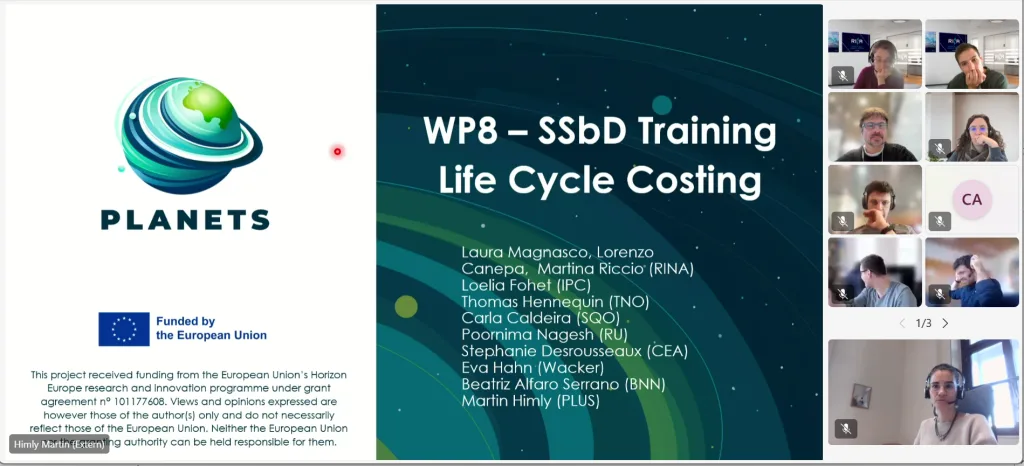
PLANETS SSbD Training on Life Cycle Cost assessment (LCC) (12.12.2025, online)

On 12 December 2025, the PLANETS consortium organised an internal training session on Life Cycle Cost assessment (LCC). The session began with an introduction to the topic, followed by an explanation of the different phases of an LCC: Goal and Scope, Inventory, Impact Assessment and Interpretation. Participants learnt how to evaluate and visualise LCC results, and gained insight into the pros and cons of including this economic dimension in SSbD assessments. The discussion also covered Critical Raw Materials (CRMs) and their relevance for SSbD assessments. Participants then performed an interactive exercise on building a cost inventory using paints as a specific example.

Highlights of the workshop

Martin Himly (PLUS), the leader of the training work package within PLANETS, started the training. He began by introducing the session and outlining its objectives, structure and background information.

Loélia Fohet (ICT) then explained the importance of including the economic dimension in SSbD assessments. This economic dimension includes LCC (identifying cost hotspots) and identifying Critical Raw Materials (CRMs) (evaluating risks in the value chain). She also emphasised that a correct SSbD assessment requires consideration of all three sustainability dimensions: environmental, economic and social. Loélia then clarified what an LCC is, emphasising that it is an assessment method, not an economic cost-accounting method, related to the product under consideration.

After a short interactive Mentimeter session to evaluate the participants’ level of knowledge of LCC, Lorenzo Canepa (RINA) provided a detailed overview of the LCC steps (goal & scope, life cycle inventory, impact assessment and interpretation of results), with a focus on the stakeholders’ perspective in goal & scope. Laura Magnasco (RINA) explained life cycle inventory (LCI) data needs, the differences between LCC and LCA inventories, and provided tips on addressing missing inventory data at low TRL (e.g. CAPEX, maintenance costs, and personnel costs).

Participants then split into different breakout groups, moderated by Laura Magnasco, Lorenzo Canepa (RINA), Loélia Fohet (IPC) and Thomas Hennequin (TNO), and had the chance to build a cost inventory using a specific example relating to paints.

Finally, the pros and cons of including the economic dimension in SSbD assessments were analysed.

In the final part of the training, Laura Magnasco (RINA) discussed critical raw materials (CRM), explaining what they are, why they are important, how to evaluate them, and why they should be evaluated in SSbD assessments.

The following PLANETS partners were involved in the preparation of this training: Laura Magnasco, Lorenzo Canepa, Martina Riccio (RINA), Loélia Fohet (IPC), Thomas Hennequin (TNO), Carla Caldeira (SQO), Poornima Nagesh (RU), Stéphanie Desrousseaux (CEA), Eva Hahn (Wacker), Beatriz Alfaro Serrano (BNN), and Martin Himly (PLUS).


 Training Materials – In preparation

Building on the insights from this internal training, PLANETS has developed external training materials as an introduction to LCC. These materials include:

  • Presentation slides
  • A PDF of the collaborative whiteboard for a cost inventory building exercise
  • Recording of the session

All training materials are available in the PLANETS community on Zenodo under a Creative Commons Attribution 4.0 International licence, which allows for redistribution and reuse with proper credit to the creators. You can access them here, with DOI: 10.5281/zenodo.19473437.

Additionally, all recorded sessions can be viewed on the PLANETS YouTube channel.
Training materials
Watch Recording on LCC
Screenshot_LCCtraining_1
Plastizicers-survey
News
November 25, 2025

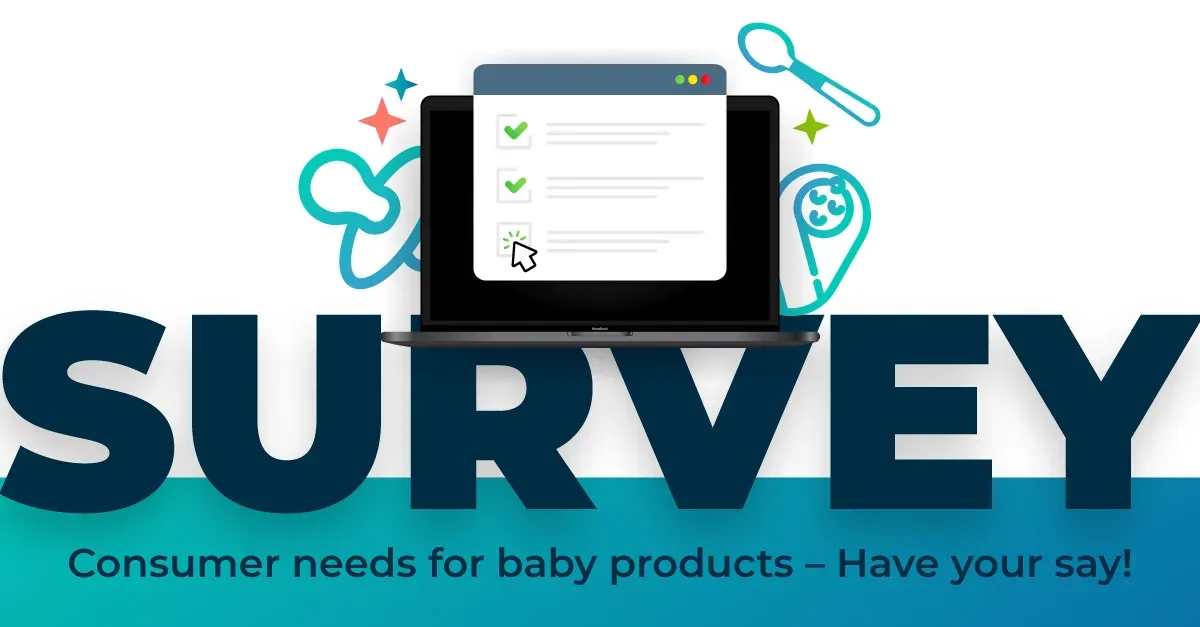
Consumer needs for baby products – Have your say!

The EU funded project PLANETS applies the Safe and Sustainable by Design (SSbD) framework, to develop and demonstrate safer, more sustainable alternatives to existing substances of concern in different applications: surfactants, flame retardants and plasticizers.

For one of the plasticizers applications, to better understand (parents’) expectations and preferences regarding baby products such as spoons and teethers, PLANETS has created this anonymous survey. We would be very thankful to get your opinion!

Start the survey now
PLANETS_Training_eLCA_20251105
News
November 14, 2025

PLANETS SSbD Training in Environmental Life Cycle Assessment (04.11.2025, online)

On 5 November 2025, the PLANETS consortium organised an internal training session on Environmental Life Cycle Assessment (eLCA). The session began with an introduction to the topic and went on to explain the different phases of eLCA in detail, starting with Goal & Scoping. Participants learned about different databases and their particularities, how to apply prospective LCA to earlier stages of innovation, and how to generate endpoints and midpoints from elementary flows. We also briefly discussed how different characterisation factors influence impact assessment, and learnt how to address uncertainty using sensitivity analysis. Participants performed an interactive exercise on building an inventory (LCI) on a specific example of paints.

Highlights of the workshop

The session was moderated by Martin Himly (PLUS), the leader of the training work package within PLANETS. He introduced the session by outlining its objectives, structure and background information. Thomas Henniquin (TNO) explained the four main phases of an eLCA, delving into each one: Goal & Scope, Life Cycle Inventory (LCI), Life Cycle Impact Assessment (LCIA), and Interpretation. The participants performed an interactive exercise on a specific example of paints for inventory (LCI) building, divided into break-out groups.

Thomas provided further insight into databases, multifunctionality and prospective LCA. Loelia Fohet (IPC) then introduced the concept of LCIA, including characterisation factors (CF), and led the attendees in a discussion about interpreting results as part of an interactive poll to gain experience in interpreting results. The final part of the training focused on dealing with uncertainty using sensitivity analysis, which is relevant for interpreting results.

Following PLANETS partners were involved in the preparation of this training: Thomas Hennequin (TNO), Carla Caldeira (SQO), Loelia Fohet (IPC), Laura Magnasco (RINA), Poornima Nagesh (RU), Stephanie Desrousseaux (CEA), Eva Hahn (Wacker), Beatriz Alfaro Serrano (BNN), and Martin Himly (PLUS) .


 Training Materials – In preparation

Building on the insights from this internal training, PLANETS has developed external training materials as an introduction to eLCA. These materials include:

  • Presentation slides
  • A pdf of the collaborative whiteboard of an exercise on inventory building
  • Recording of the training. Additionally, recording of one of the break-out rooms (led by Laura Magnasco, RINA) 

All training materials are available in the PLANETS community on Zenodo under the Creative Commons Attribution 4.0 International licence, allowing for redistribution and reuse with proper credit to the creators. You can access them here, with DOI: 10.5281/zenodo.19472916.

Additionally, all recorded sessions can be viewed on the PLANETS YouTube channel.
Training materials
Watch Recording on LCA
Watch Recording with the break-out room
LCAtraining_1-IntroSlide
News
October 22, 2025

PLANETS SSbD Training on Life Cycle Sustainability Assessment (10.09.2025, online)

On 10 September 2025, PLANETS consortium organised an internal training on Life Cycle Sustainability Assessment, with an introduction to the topic and theoretical background, with the main aim of harmonising the consortium’s understanding on this topic, particularly among innovators and industrial partners who are not directly involved in the project.

Highlights of the workshop

The session was moderated by Martin Himly (PLUS), who leads the training work package within PLANETS. He introduced the session, outlining the objectives and structure of the training, as well as background information.

Carla Caldeira (SYENSQO) introduced to SSbD and Life Cycle thinking. Loelia Fohet (IPC) and Thomas Hennequin (TNO) talked about environmental dimension (E-LCA). Laura Magnasco (RINA) was in charge of the Life Cycle Cost (LCC) and the social LCA (S-LCA). Finally, Eva Hahn (WACKER) talked about making decisions with LCA results.

During the break-out sessions, an interactive whiteboard exercise (prepared by Beatriz Alfaro (BNN)) was performed with the participants, to practice on functional units and reference flows.

An interactive poll was also performed with the participants, to get some insight into their level of experience with LCA and the challenges they encountered so far.

 Training Materials

Building on the insights from this internal training, PLANETS has developed external training materials as an introduction to LCA. These materials include:

  • Presentation slides, with an LCA introduction giving also insight into life cycle cost (LCC) and social LCA
  • A pdf of the collaborative white board used during the break-outs where process flows, functional unit and reference flows were determined
  • Recording  [YouTube video]

All training materials are available in the PLANETS community on Zenodo under the Creative Commons Attribution 4.0 International licence, allowing for redistribution and reuse with proper credit to the creators. You can access them here, with DOI: 10.5281/zenodo.17399294.

Additionally, all recorded sessions can be viewed on the PLANETS YouTube channel.
Training materials
Watch Recording on LCA
PLANETS4thSSbDtraining-FAIRdata-DPP
News
September 2, 2025

PLANETS 4th SSbD Training on FAIR data & models and DPP (19.05.2025, online)

On 19 May 2025, PLANETS consortium organised an internal training on (1) FAR data & models, and (2) Digital Product Passport (DPP).

Aim and key topics of the training

FAIR data and models: The workshop provided a comprehensive overview of the FAIR data principles—Findable, Accessible, Interoperable, and Reusable—and their application in research data management. It aimed to raise awareness, provide assessment tools, and offer practical guidance for enhancing data FAIRness in research workflows.

  • Introduction to FAIR Principles: Participants were introduced to the concept of FAIR, including what the acronym stands for and why these principles are important in data sharing and reuse. The distinction between FAIR data and Open Data was also clarified.
  • Assessing FAIRness, exploring common challenges associated with non-FAIR data and introduced tools such as FAIR-Aware and the FAIR Evaluation Services to help participants assess the FAIRness of their own datasets. Real-life examples from other projects (FIPs – FAIR Implementation Profiles) were used to illustrate how organizations are implementing FAIR principles in practice.
  • FAIR in Practice, with practical implementation strategies, covering essential elements such as metadata standards, persistent identifiers, licensing and access considerations, controlled vocabularies, trusted data repositories, and approaches to improving metadata quality.
  • Internal discussion on FAIR Data and the PLANETS Project, which included a proposed data workflow tailored for the PLANETS project.

Digital Product Passport (DPP): This workshop gave an overview of the DPP concept, its relevance in supporting sustainable and circular product systems, gave policy context, and practical implications for stakeholders across the product lifecycle, preparing participants to understand and deal with upcoming regulatory and data management requirements. Key topics covered:

  • Introduction to DPP, with a definition of the Digital Product Passport, and explanation of its role in enabling better product information exchange to support sustainability, compliance, and circular economy goals, including historical and policy background of the DPP and major milestones in its development. The discussion highlighted how the DPP emerged from broader EU policy efforts.
  • Policy Context: DPP within the framework of key European Union initiatives EU Green Deal (aiming for climate neutrality), CEAP (Circular Economy Action Plan, promoting sustainable product lifecycles), and ESPR (Ecodesign for Sustainable Products Regulation, which provides the legal basis for DPP implementation).
  • DPP Objectives (transparency, circularity, and traceability) and identified key stakeholders involved, including manufacturers, regulators, consumers, recyclers, and others throughout the product value chain.
  • Product groups covered by DPP as well as prioritization criteria.
  • Data requirements for DPP (such as material composition, carbon footprint, and regulatory compliance information) as well as challenges in data collection and management.
  • Practical examples of DPPs in use or in development, to help participants visualize how these passports might be applied in different sectors.
Highlights of the workshop

The session was moderated by Martin Himly (PLUS), who leads the training work package within PLANETS. He introduced the session, outlining the objectives and structure of the training.

Vanessa Alvear (AIMEN) lead the FAIR data training, supported by Benjamin Punz (PLUS). Anita Sosnowska (QSAR Lab) explained the role of QSAR in respect to FAIR and Carla Caldeira (SYENSQO) commented on data sharing versus confidentiality. The DPP training started with an interactive questionnaire (prepared by Beatriz Alfaro and Matiss Reinfelds (BNN) to get the first impressions from the participants about their concerns, potentials and limitations of DPP. The DPP training was led by Asif Mohammen (AIMEN).

 
Training Materials

Building on the insights from this internal training, PLANETS has developed external training materials as an introduction to FAIR data & models and Digital Product Passport (DPP). These materials include:

  • Presentation slides of the FAIR data & models training
  • Presentation slides of the DPP training
  • Recording of the FAIR data & models training  [YouTube video]
  • Recording of the DPP training [YouTube video]

All training materials are available in the PLANETS community on Zenodo under the Creative Commons Attribution 4.0 International licence, allowing for redistribution and reuse with proper credit to the creators. You can access them here.

Additionally, all recorded sessions can be viewed on the PLANETS YouTube channel.

Training materials
Watch Recording FAIR data & models
Watch Recording DPP
PLANETS3rdSSbDtraining-QSAR
News
September 2, 2025

PLANETS 3rd SSbD Training on Tier 2 Assessment-QSAR (08.04.2025, Gdansk, PL, & online)

On 8 April 2025 and aligned with the M6 General Assembly of the project in Gdansk (Poland), PLANETS organized a hybrid internal training for all project partners on SSbD assessment.

The aim of this workshop was the harmonisation of understanding for entire consortium, focusing on intermediate and full assessment (Tier 2-3), including hazard identification, QSAR modelling, and toxicity prediction. Participants explored existing tools for predicting physicochemical properties and biological activities of chemical substances, key elements in the Safe-and-Sustainable-by-Design (SSbD) approach.

Highlights of the workshop

The session started with a brief overview of Martin Himly (PLUS), who leads the training work package within PLANETS, about the previous internal SSbD trainings. He introduced the session, outlining the objectives and structure of the training. Thomas Hennequin (TNO) and Ayse Ay (BASF) continued with a summary of ideas for the collection of harmonised data. Afterwards, Anita Sosnowska (QSAR Lab) gave an overview on QSAR and Szymon Zdybel (QSAR Lab) performed a hands-on exercise on QSAR with all participants.

Training Materials

Building on the insights from this internal training, PLANETS has developed external training materials for conducting a SSbD Tier 2 assessment by QSAR modeling. These materials include:

  • A QSAR step-by-step guide, the presentation slides, and four VEGA reports to conduct a practical exercise. Materials available here.
  • Recording of the workshop [YouTube]


All training materials are available in the PLANETS community on Zenodo under the Creative Commons Attribution 4.0 International licence, allowing for redistribution and reuse with proper credit to the creators. You can access them here.

Additionally, all recorded sessions can be viewed on the PLANETS YouTube channel.

Training materials
Watch Recordings
  • 1
  • 2

Contact

Plasticizers, fLame–retardants and surfactANts: new alternatives validating the safE and susTainable by deSign approach 

  • info@project-planets.eu

Helpful links

Downloads
Legal Notice
Privacy Policy
EN_FundedbytheEU_RGB_WHITE Outline

This project received funding from the European Union’s Horizon Europe research and innovation programme under grant agreement n° 101177608. Views and opinions expressed are however those of the author(s) only and do not necessarily reflect those of the European Union. Neither the European Union nor the granting authority can be held responsible for them.


PLANETS is a member of NSC.

back to top