logotype
  • Project
    • About PLANETS
    • Objectives
  • Applications
    • Surfactants
    • Flame retardants
    • Plasticizers
  • Partners
  • Collaborations
  • Resources
  • News
  • Contact
Linkedin
logotype
  • Project
    • About PLANETS
    • Objectives
  • Applications
    • Surfactants
    • Flame retardants
    • Plasticizers
  • Partners
  • Collaborations
  • Resources
  • News
  • Contact
Linkedin
  • Project
    • About PLANETS
    • Objectives
  • Applications
    • Surfactants
    • Flame retardants
    • Plasticizers
  • Partners
  • Collaborations
  • Resources
  • News
  • Contact
logotype
  • Project
    • About PLANETS
    • Objectives
  • Applications
    • Surfactants
    • Flame retardants
    • Plasticizers
  • Partners
  • Collaborations
  • Resources
  • News
  • Contact
Author: support
HomeArticles Posted by support
CoverPic_sLCAtraining
News
January 16, 2026

PLANETS SSbD Training on Social Life Cycle Assessment (sLCA) (16.01.2026, online)

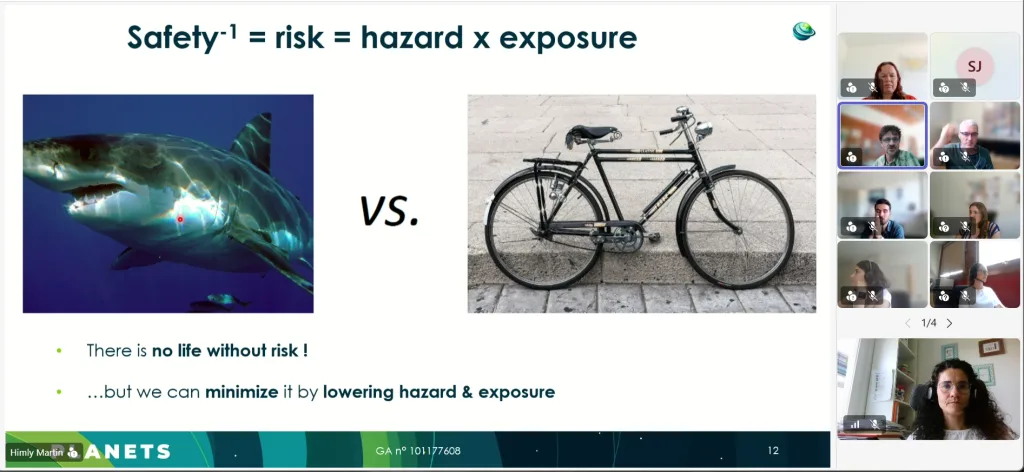
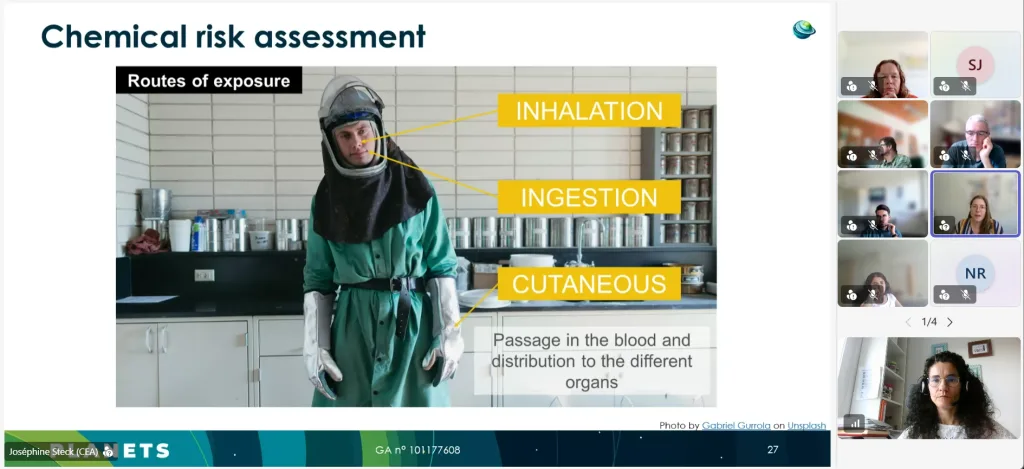
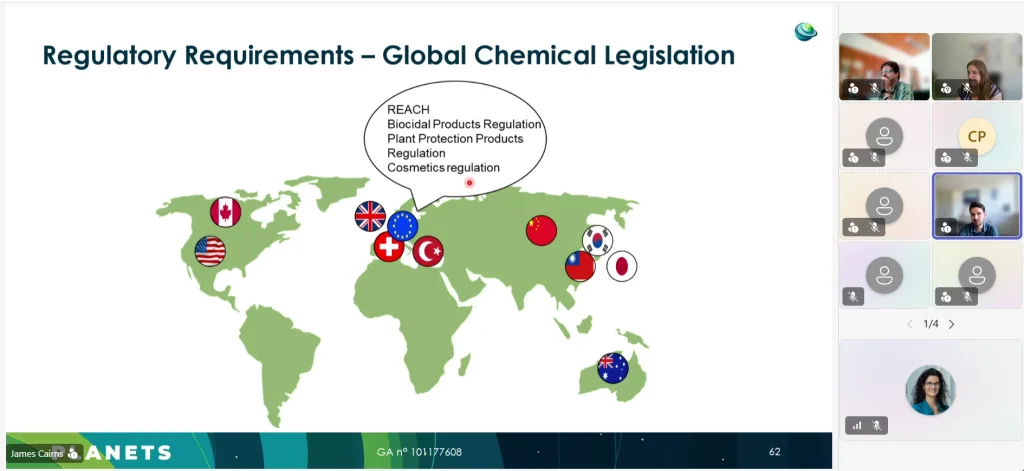
On 16 January 2026, the PLANETS consortium organised an internal training session on Social Life Cycle Assessment (sLCA). The session began with an introduction to the topic, followed by an explanation of the goals and scope of a sLCA: what sLCA is and what is not), how to performs a social assessment, use of databases, characteristics and possible uses of a sLCA, and how to correctly interpret and visualise the results.
 

Highlights of the workshop

Martin Himly (PLUS), the leader of the training work package within PLANETS, started the training. He began by introducing the session and outlining its objectives, structure and background information.

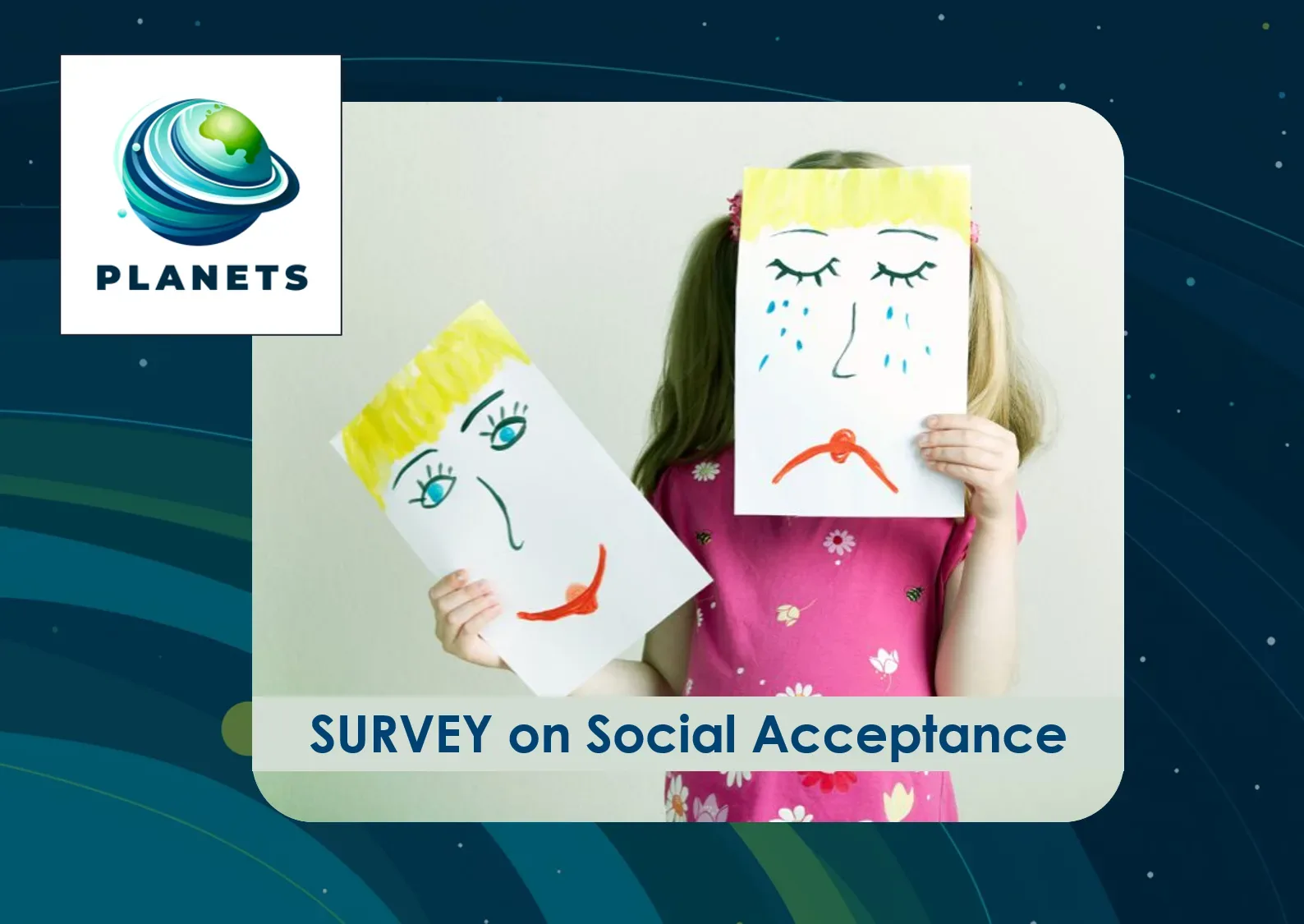
Laura Magnasco (RINA) started explaining the importance of including the social dimension in Safe-and-Sustainable-by-Design (SSbD), what it is, possible uses, types or categories of sLCAs, and explained the differences between social risks and social impacts. Laura provided a detailed overview of the sLCA steps: goal & scope, life cycle inventory, life cycle impact assessment, and how to best perform the interpretation and visualisation of results. She explained in detail how to perform the life cycle inventory, i.e., the data collection, and the difference between performing it with questionnaires and with social databases (like PSILCA/SHDB). She also commented on the potential uses of an sLCA. Finally, she explained the differences between a social LCA (for identifying “what may happen”) and social acceptance (refers to “how people feel”).
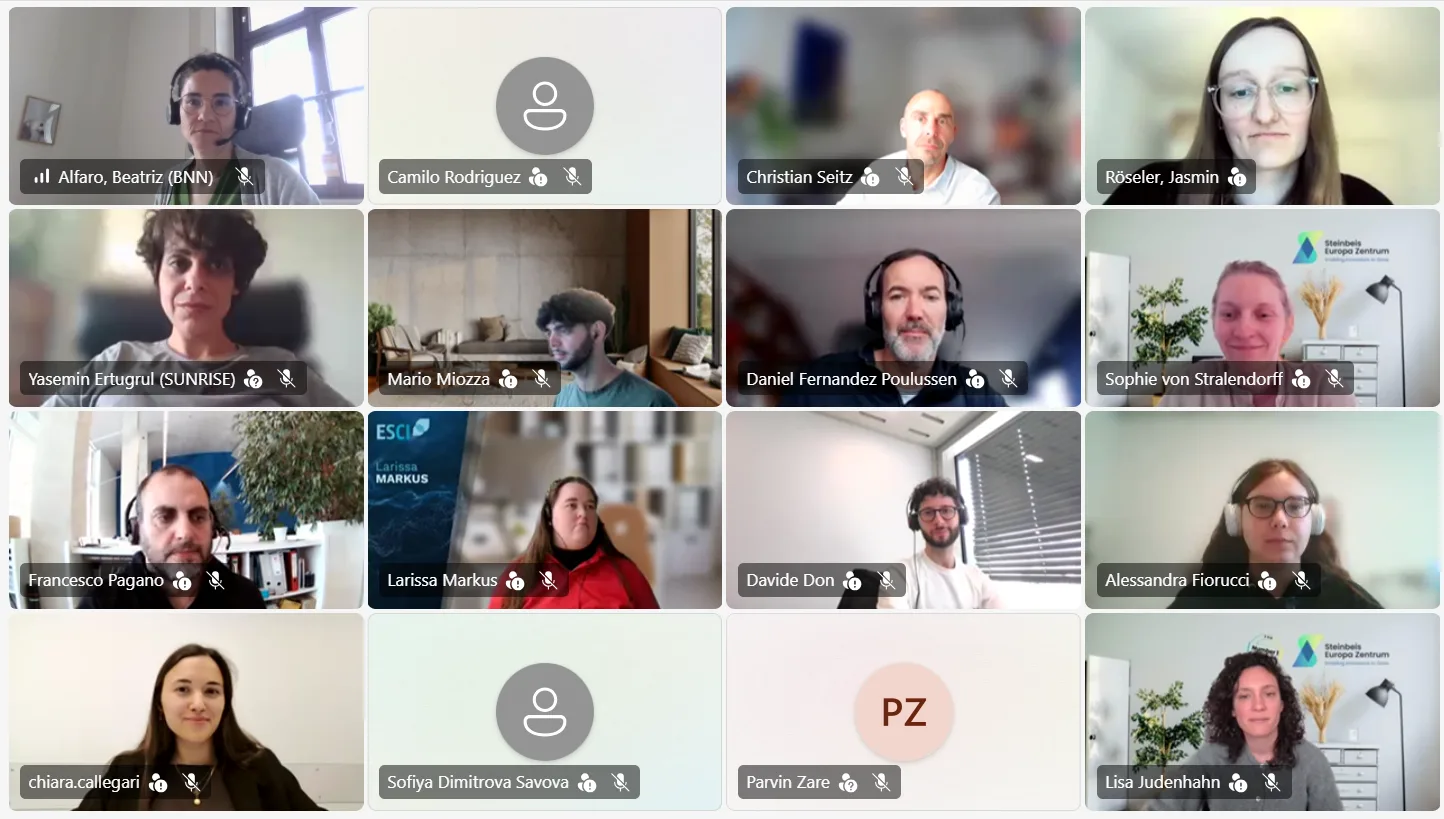
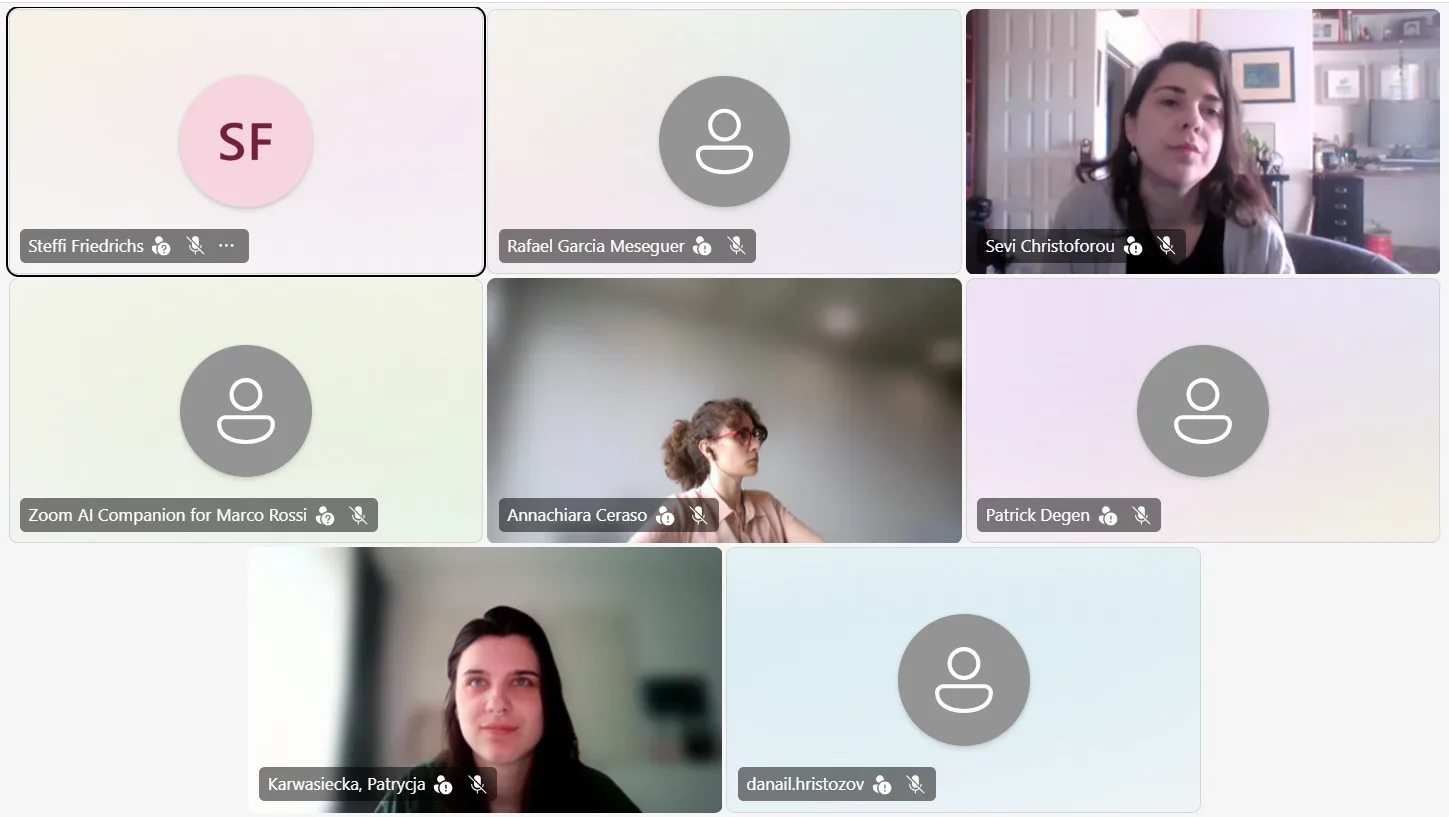
In an interactive hands-on exercise to put the concepts given into practice, participants split into different breakout groups, moderated by Laura Magnasco (RINA), Thomas Hennequin (TNO), Stephanie Desrousseaux, Quentin Aubert (CEA) to familiarise participants with key stakeholders’ groups and impact categories in a social LCA, for the concrete example of a coffee value chain.

A short interactive Mentimeter session was used to informally evaluate the participants’ level of knowledge of sLCA, and what they understood from the training.

The following PLANETS partners were involved in the preparation of this training: Laura Magnasco, Lorenzo Canepa, Martina Riccio (RINA), Thomas Hennequin (TNO), Carla Caldeira (SQO), Loélia Fohet (IPC), Poornima Nagesh (RU), Stéphanie Desrousseaux and Quentin Aubert (CEA), Beatriz Alfaro Serrano (BNN), and Martin Himly (PLUS). We also thank Dr. R. Scholtes (TNO) for the presentation “Ethics & Data in S-LCA”, which informed content on social risks and PSILCA/SHDB, which was use for the preparation of this training, and the CISUFLO project (Grant Agreement No 101003893, TOPIC ID: H2020-SC5-2020-2).


 Training Materials – In preparation

Building on the insights from this internal training, PLANETS has developed external training materials as an introduction to LCC. These materials include:

  • Presentation slides
  • A PDF of the collaborative whiteboard for a social LCA exercise
  • Recording of the session, including the break out rooms [LINK TO YOUTUBE VIDEO to be added]

All training materials are available in the PLANETS community on Zenodo under a Creative Commons Attribution 4.0 International licence, which allows for redistribution and reuse with proper credit to the creators. You can access them here (ADD LINK), with DOI: xxx (tba).

Additionally, all recorded sessions can be viewed on the PLANETS YouTube channel.

Training materials
Watch Recording on sLCA
Screenshot_sLCAtraining
IntroSlide_LCCTraining
News
December 15, 2025

PLANETS SSbD Training on Life Cycle Cost assessment (LCC) (12.12.2025, online)

On 12 December 2025, the PLANETS consortium organised an internal training session on Life Cycle Cost assessment (LCC). The session began with an introduction to the topic, followed by an explanation of the different phases of an LCC: Goal and Scope, Inventory, Impact Assessment and Interpretation. Participants learnt how to evaluate and visualise LCC results, and gained insight into the pros and cons of including this economic dimension in SSbD assessments. The discussion also covered Critical Raw Materials (CRMs) and their relevance for SSbD assessments. Participants then performed an interactive exercise on building a cost inventory using paints as a specific example.


Highlights of the workshop

Martin Himly (PLUS), the leader of the training work package within PLANETS, started the training. He began by introducing the session and outlining its objectives, structure and background information.

Loélia Fohet (ICT) then explained the importance of including the economic dimension in SSbD assessments. This economic dimension includes LCC (identifying cost hotspots) and identifying Critical Raw Materials (CRMs) (evaluating risks in the value chain). She also emphasised that a correct SSbD assessment requires consideration of all three sustainability dimensions: environmental, economic and social. Loélia then clarified what an LCC is, emphasising that it is an assessment method, not an economic cost-accounting method, related to the product under consideration.

After a short interactive Mentimeter session to evaluate the participants’ level of knowledge of LCC, Lorenzo Canepa (RINA) provided a detailed overview of the LCC steps (goal & scope, life cycle inventory, impact assessment and interpretation of results), with a focus on the stakeholders’ perspective in goal & scope. Laura Magnasco (RINA) explained life cycle inventory (LCI) data needs, the differences between LCC and LCA inventories, and provided tips on addressing missing inventory data at low TRL (e.g. CAPEX, maintenance costs, and personnel costs).

Participants then split into different breakout groups, moderated by Laura Magnasco, Lorenzo Canepa (RINA), Loélia Fohet (IPC) and Thomas Hennequin (TNO), and had the chance to build a cost inventory using a specific example relating to paints.

Finally, the pros and cons of including the economic dimension in SSbD assessments were analysed.

In the final part of the training, Laura Magnasco (RINA) discussed critical raw materials (CRM), explaining what they are, why they are important, how to evaluate them, and why they should be evaluated in SSbD assessments.

The following PLANETS partners were involved in the preparation of this training: Laura Magnasco, Lorenzo Canepa, Martina Riccio (RINA), Loélia Fohet (IPC), Thomas Hennequin (TNO), Carla Caldeira (SQO), Poornima Nagesh (RU), Stéphanie Desrousseaux (CEA), Eva Hahn (Wacker), Beatriz Alfaro Serrano (BNN), and Martin Himly (PLUS).


 Training Materials – In preparation

Building on the insights from this internal training, PLANETS has developed external training materials as an introduction to LCC. These materials include:

  • Presentation slides
  • A PDF of the collaborative whiteboard for a cost inventory building exercise
  • Recording of the session, including the break out rooms [LINK TO YOUTUBE VIDEO to be added]

All training materials are available in the PLANETS community on Zenodo under a Creative Commons Attribution 4.0 International licence, which allows for redistribution and reuse with proper credit to the creators. You can access them here (ADD LINK), with DOI: xxx (tba).

Additionally, all recorded sessions can be viewed on the PLANETS YouTube channel.

Training materials
Watch Recording on LCC
Screenshot_LCCtraining_1
20251126_PGCevent_Vienna (1) - 2
News
December 4, 2025

PLANETS engages in Dialogue on Safe and Sustainable Chemistry in Vienna

On 26 November 2025, PLANETS participated in an event jointly organised by Platform Green Chemistry (PGC) and SusChem-AT at the Vienna University of Technology. Bringing together stakeholders from policy, industry, research and the start-up community, the meeting focused on “From idea to impact: Start-ups and safe and sustainable by design for future-oriented chemistry.”

Clemens Wolf (BNN) introduced the evolving EU Safe-and-Sustainable-by-Design (SSbD) framework, outlining its importance for developing safer and more sustainable advanced materials.

Martin Himly (PLUS) demonstrated how SSbD principles can be practically implemented to support innovation within green chemistry start-ups.

Clemens and Martin also conducted an informal live survey with the participants, to assess their level of knowledge on SSbD. Results available here.

Their presentation is available under Creative Commons Attribution 4.0 International in the PLANETS Community in Zenodo with DOI: 10.5281/zenodo.17817072.

PLANETS was pleased to be part of this forward-looking exchange.


A warm thank you goes to the Federal Ministry of Agriculture, Forestry, Regional Development and Water Management (BMLUK) and the Austrian Environmental Agency for making this event possible.

20251126_PGCevent_Vienna (1)
20251126_PGCevent_Vienna (3)
20251125_C4R_2ndMeeting_GroupPic
News
December 2, 2025

PLANETS @ 2nd Collab4Resilience (C&R) meeting

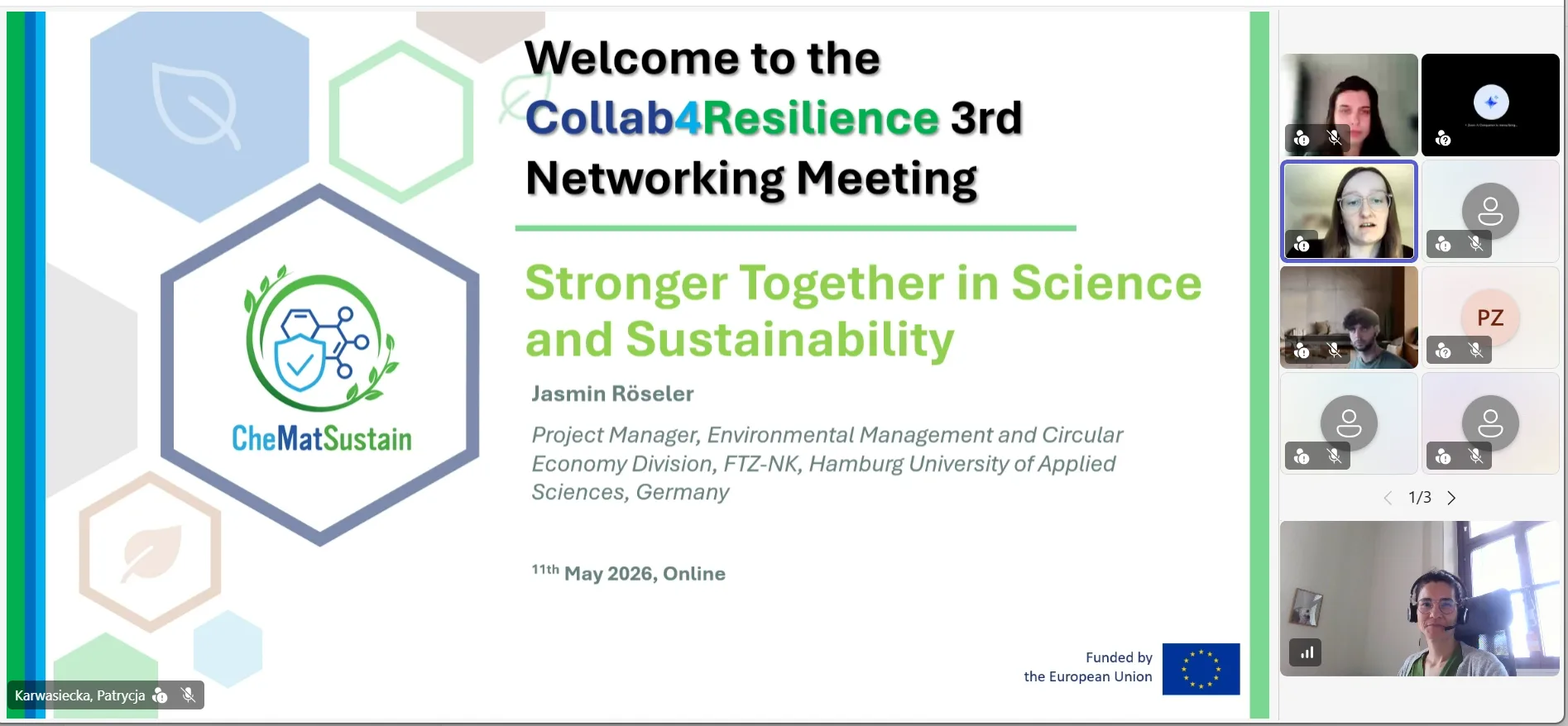
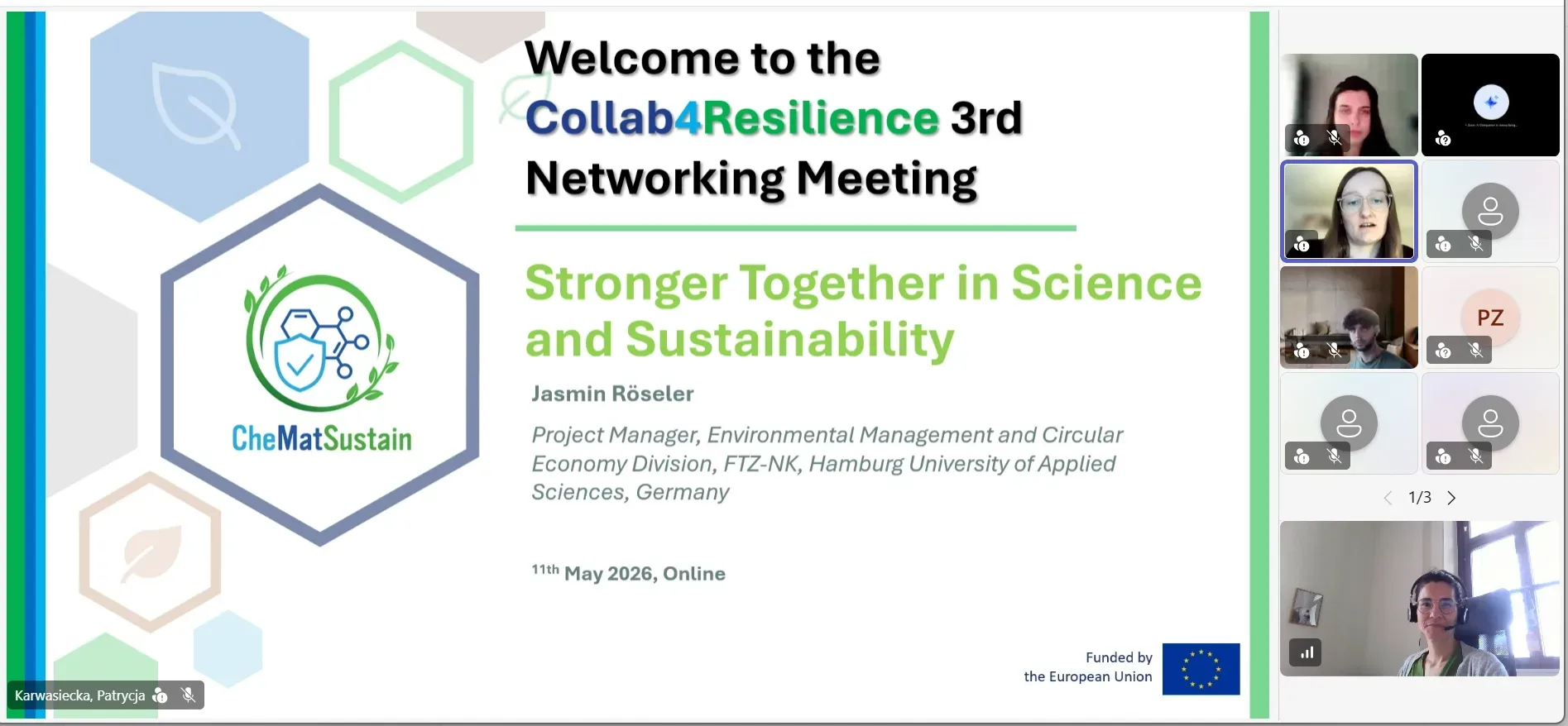
On 25 November 2025, the Collab4Resilience (C&R) network met for its second online networking workshop. 17 participants representing 9 EU-funded projects gather to further build on the KOM from April 2025, and aiming to strengthen collaboration between projects and enhance their visibility and outreach activities.

The meeting was opened by the Hamburg University of Applied Sciences, coordinator of the CheMatSustain project and leader of the initiative. They provided a brief overview of the network’s progress to date and recent developments within CheMatSustain. This was followed by a short presentation from the University of Bologna introducing the CheMatSustain Facility, the project’s key output, launched in 2025.

One of the highlights of the meeting was the “What We’re Proud Of” round, during which each project highlighted recent developments and achievements. Afterthat, we dive into a more interactive session with a digital mural to gather ideas for future communication activities—ranging from social media initiatives to joint events—as well as a knowledge-sharing activity to identify tangible collaboration opportunities.

The workshop concluded with a forward-looking discussion on plans for 2026, setting out practical next steps to strengthen communication, share resources, and foster mutual support.

Overall, the event demonstrated strong interest in further developing the community. 

Agenda of the meeting.

Plastizicers-survey
News
November 25, 2025

Consumer needs for baby products – Have your say!

The EU funded project PLANETS applies the Safe and Sustainable by Design (SSbD) framework, to develop and demonstrate safer, more sustainable alternatives to existing substances of concern in different applications: surfactants, flame retardants and plasticizers.

For one of the plasticizers applications, to better understand (parents’) expectations and preferences regarding baby products such as spoons and teethers, PLANETS has created this anonymous survey. We would be very thankful to get your opinion!

Start the survey now
PLANETS_SSbDbootcamp2025_BNN_2
News
November 15, 2025

PLANETS @ 3rd SSbD Bootcamp

At the end of October (28-30.10.) over 50 participants from 16 different countries gathered in Ispra (Italy) to learn more about the new advances in “Safe and Sustainable by Design”. This boot camp united stakeholders from different fields (LCA, safety experts etc.) and various institutions: research centres, universities, consultants, SMEs, and large industry.

Katharina Lang-Hogrefe from BNN also took part in the boot camp, to get up to date with latest activities in SSbD and transferring the knowledge also to PLANETS.

At the site of the Joint Research Centre (JRC) of the European Commission, close to Lago Maggiore, the 3rd edition of the SSbD boot camp concentrated on the updates of the revised SSbD framework published earlier this year. In particular, this included a presentation of the new structure of the framework, the introduced “Scoping Analysis” and the more detailed assessment of the socio-economic sustainability. Talks from experts and JRC members on the different dimensions and aspects of the revised SSbD framework gave a diverse intellectual input. Special emphasis was also given to the evaluation and documentation of the assessments, and an overview and current status of the PARC toolbox.

This was complemented by three Hands-on exercises: on Scoping Analysis, Safety Assessment (Addressing chemicals, materials, processes and products) and Environmental Sustainability Assessment. In small groups the participants worked together in interdisciplinary teams to solve tasks of SSbD practitioners. In intense discussions the challenges and chances of implementing the SSbD assessments in practice came to light and gave fascinating new insights into the framework, also supporting the work of ongoing SSbD projects like PLANETS.

PLANETS_SSbDbootcamp2025_BNN_1

The heavy brain work was compensated by a nice social program from the organizers. At the first evening the group was treated with typical Italian aperitivo, and the second evening offered a great social dinner at Hotel Europe directly at the bank of Lago Maggiore. Judging from the pleasant atmosphere and the vivid talks the ideas for some interesting collaborations might have found their start in Ispra on this evening. We thank all organizers for this great event!

The final version of the revised framework will be published mid of December 2025. Recordings of the boot camp are available online.

PLANETS_Training_eLCA_20251105
News
November 14, 2025

PLANETS SSbD Training in Environmental Life Cycle Assessment (04.11.2025, online)

On 5 November 2025, the PLANETS consortium organised an internal training session on Environmental Life Cycle Assessment (eLCA). The session began with an introduction to the topic and went on to explain the different phases of eLCA in detail, starting with Goal & Scoping. Participants learned about different databases and their particularities, how to apply prospective LCA to earlier stages of innovation, and how to generate endpoints and midpoints from elementary flows. We also briefly discussed how different characterisation factors influence impact assessment, and learnt how to address uncertainty using sensitivity analysis. Participants performed an interactive exercise on building an inventory (LCI) on a specific example of paints.

Highlights of the workshop

The session was moderated by Martin Himly (PLUS), the leader of the training work package within PLANETS. He introduced the session by outlining its objectives, structure and background information. Thomas Henniquin (TNO) explained the four main phases of an eLCA, delving into each one: Goal & Scope, Life Cycle Inventory (LCI), Life Cycle Impact Assessment (LCIA), and Interpretation. The participants performed an interactive exercise on a specific example of paints for inventory (LCI) building, divided into break-out groups.

Thomas provided further insight into databases, multifunctionality and prospective LCA. Loelia Fohet (IPC) then introduced the concept of LCIA, including characterisation factors (CF), and led the attendees in a discussion about interpreting results as part of an interactive poll to gain experience in interpreting results. The final part of the training focused on dealing with uncertainty using sensitivity analysis, which is relevant for interpreting results.

Following PLANETS partners were involved in the preparation of this training: Thomas Hennequin (TNO), Carla Caldeira (SQO), Loelia Fohet (IPC), Laura Magnasco (RINA), Poornima Nagesh (RU), Stephanie Desrousseaux (CEA), Eva Hahn (Wacker), Beatriz Alfaro Serrano (BNN), and Martin Himly (PLUS) .


 Training Materials – In preparation

Building on the insights from this internal training, PLANETS has developed external training materials as an introduction to eLCA. These materials include:

  • Presentation slides
  • A pdf of the collaborative whiteboard of an exercise on inventory building
  • Recording of the training. Additionally, recording of one of the break-out rooms (led by Laura Magnasco, RINA) 

All training materials are available in the PLANETS community on Zenodo under the Creative Commons Attribution 4.0 International licence, allowing for redistribution and reuse with proper credit to the creators. You can access them here (ADD LINK), with DOI: xxx (tba).

Additionally, all recorded sessions can be viewed on the PLANETS YouTube channel.

Training materials
Watch Recording on LCA
Watch Recording with the break-out room
PLANETS_SSbD25_GroupPic1
News
November 12, 2025

PLANETS @ SSbD25

From 10-12 November 2025, PLANETS’ partners took part in the 2nd Safe-and-Sustainable-by-Design (SSbD) Conference – SSbD25, held in Zurich, Switzerland. The event, organised by IRISS project – the International SSbD Community – and Empa, brought together researchers, industry representatives, and policymakers to exchange knowledge and advance the implementation of SSbD principles across sectors.

The PLANETS consortium was well represented, with partners including Sébastien Artous (CEA), Ayse Ay and Wendel Wohlleben (BASF), as well as Benjamin Punz and Martin Himly (PLUS).

During the conference, Ayse Ay presented a poster on the SSbD assessment of alternative flame retardants for use in plastic insulation foams, showcasing PLANETS’ contribution to developing safer and more sustainable materials. DOI: 10.5281/zenodo.17593867.

Wendel gave an oral presentation entitled “Innovators tailor the SSbD implementation via SSbD scenarios“. In his presentation, Wendel explained how innovators can adapt SSbD to their specific context. It introduces rules for tailoring SSbD based on key scoping factors—novelty, sector, and innovation goals—and economic aspects such as R&D budget, maturity, and expected value. From these, archetypal scenarios arederived that reveal where economic incentives support tailored SSbD approaches, offering clear guidance for innovators.

It was a great opportunity to reconnect with the broader SSbD community, share insights, and discuss the path forward towards sustainable innovation.

A big thank you to the organisers for an inspiring event – we’re already looking forward to next year’s edition!

Conference programm available here.

PLANETS_SSbD25_Ayse_Poster_1
PLANETS_SSbD25_GroupPic1
SSbD25_WendelPresentation2
SSbD25_WendelPresentation
SSbD25_GrouPictureAll
GroupPic_2
News
October 27, 2025

PLANETS M12 General Assemby in Utrecht (Netherlands) (Oct. 2025)

After a year of intensive collaboration, PLANETS partners gathered on 15–16 October 2025 for the M12 General Assembly in the historic and picturesque city of Utrecht, the Netherlands.

During the Assembly, all project partners shared updates on the progress achieved across the various work packages over the last 6 months. The sessions fostered constructive discussions on key developments and strategic directions for the next six months of the project.

In addition to the work package updates, dedicated parallel sessions were organised for the case studies on surfactants, flame retardants, and plasticizers. These sessions focused on technical progress, data collection, and coordination of ongoing activities.

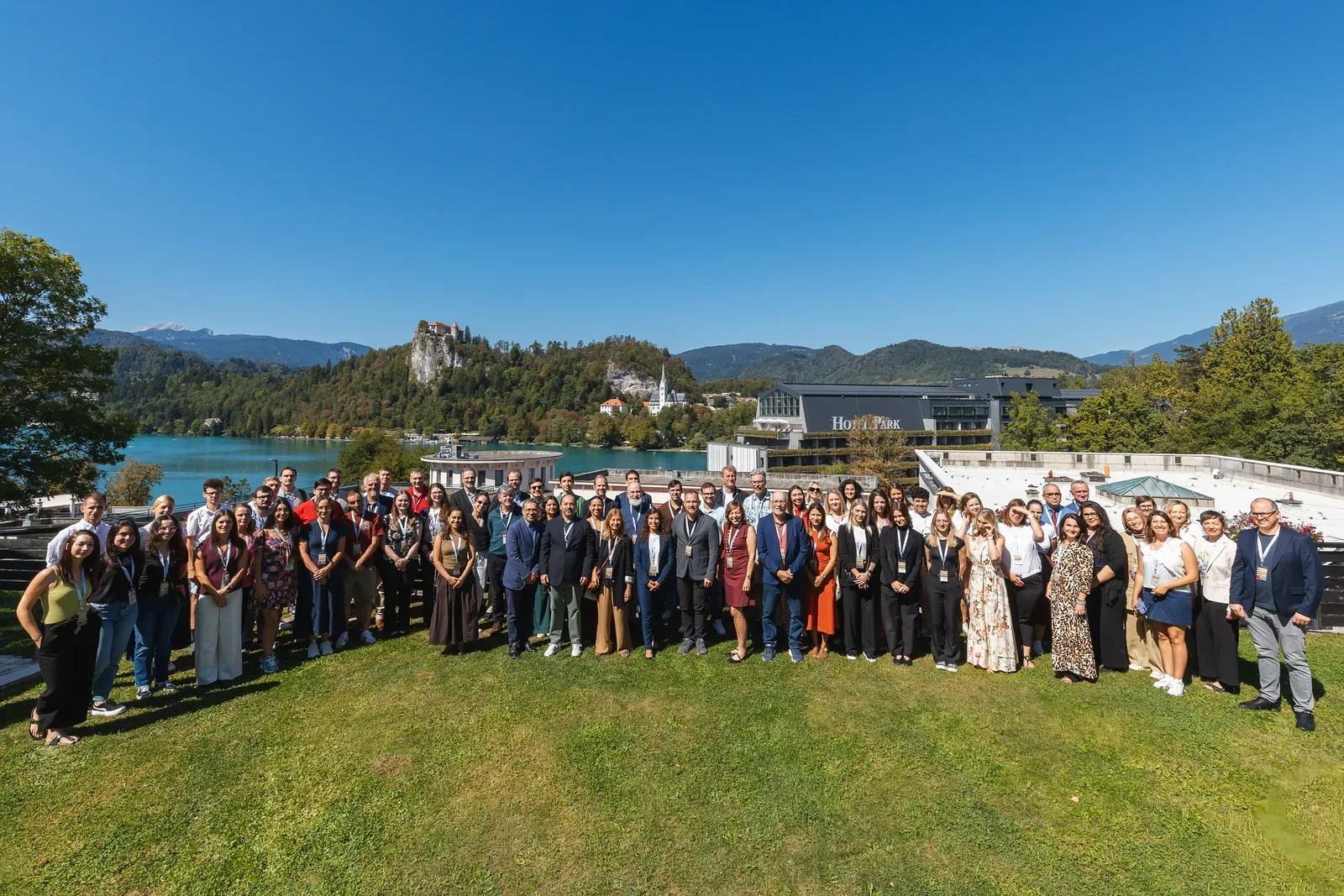
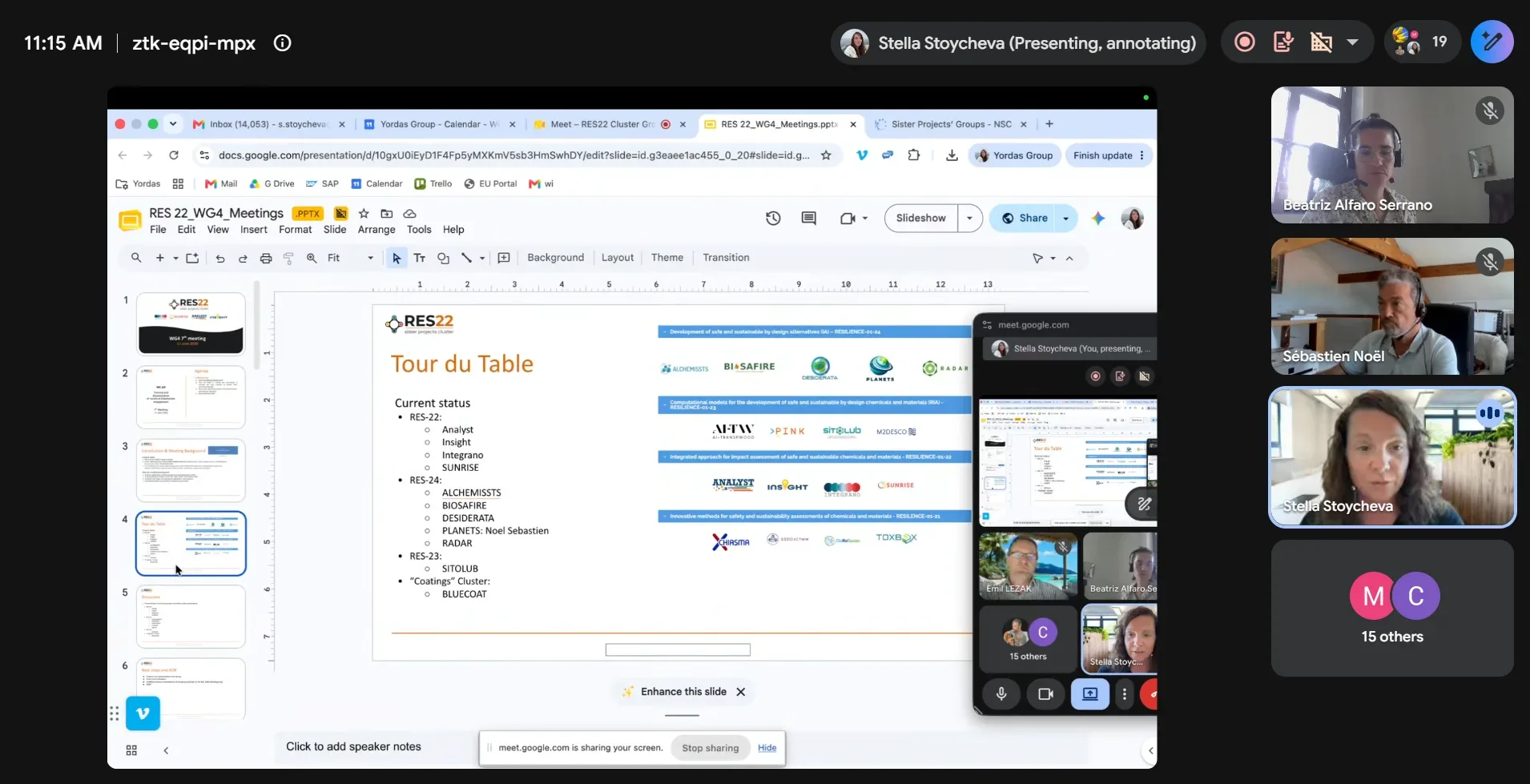
Aligned with the General Assembly, a joint session with the sister projects was held— AlchemiSSts, BIOSAFIRE, DESIDERATA, and RADAR. Each project gave a brief presentation to lay the groundwork for closer future collaboration. PLANETS will be introduced as well during the next GA of each sister project.

The agenda also featured a presentation by Ronald Flipphi from the Dutch Ministry of Infrastructure and Water Management, who provided valuable insights from a policymaker’s perspective on Safe-and-Sustainable-by-Design (SSbD). 

Special thank you goes to our colleagues at TNO for hosting an excellent meeting and extending warm hospitality, allowing all participants to experience a touch of Dutch culture throughout the meeting.

Some impressions from the meeting:
ParallelSessionWP5 (2)
GeneralAssembly (1)
GeneralAssembly (2)
GeneralAssembly (3)
GeneralAssembly (4)
GeneralAssembly (6)
GeneralAssembly (7)
GeneralAssembly (9)
GeneralAssembly (10)
GeneralAssembly (11)
Networking (3)
Networking (5)
Networking (6)
ParallelSession_WP3
ParallelSession_WP4
Utrecht_ (3)
Utrecht_ (6)
Utrecht_ (9)
Utrecht_ (10)
Utrecht_ (11)
Utrecht_ (13)
Utrecht_
Utrecht_ (14)
Utrecht_ (16)
Dinner_Day1_1
Dinner_Day1_2
LCAtraining_1-IntroSlide
News
October 22, 2025

PLANETS SSbD Training on Life Cycle Sustainability Assessment (10.09.2025, online)

On 10 September 2025, PLANETS consortium organised an internal training on Life Cycle Sustainability Assessment, with an introduction to the topic and theoretical background, with the main aim of harmonising the consortium’s understanding on this topic, particularly among innovators and industrial partners who are not directly involved in the project.

Highlights of the workshop

The session was moderated by Martin Himly (PLUS), who leads the training work package within PLANETS. He introduced the session, outlining the objectives and structure of the training, as well as background information.

Carla Caldeira (SYENSQO) introduced to SSbD and Life Cycle thinking. Loelia Fohet (IPC) and Thomas Hennequin (TNO) talked about environmental dimension (E-LCA). Laura Magnasco (RINA) was in charge of the Life Cycle Cost (LCC) and the social LCA (S-LCA). Finally, Eva Hahn (WACKER) talked about making decisions with LCA results.

During the break-out sessions, an interactive whiteboard exercise (prepared by Beatriz Alfaro (BNN)) was performed with the participants, to practice on functional units and reference flows.

An interactive poll was also performed with the participants, to get some insight into their level of experience with LCA and the challenges they encountered so far.

 Training Materials

Building on the insights from this internal training, PLANETS has developed external training materials as an introduction to LCA. These materials include:

  • Presentation slides, with an LCA introduction giving also insight into life cycle cost (LCC) and social LCA
  • A pdf of the collaborative white board used during the break-outs where process flows, functional unit and reference flows were determined
  • Recording  [YouTube video]

All training materials are available in the PLANETS community on Zenodo under the Creative Commons Attribution 4.0 International licence, allowing for redistribution and reuse with proper credit to the creators. You can access them here, with DOI: 10.5281/zenodo.17399294.

Additionally, all recorded sessions can be viewed on the PLANETS YouTube channel.

Training materials
Watch Recording on LCA
  • 1
  • 2
  • 3

Contact

Plasticizers, fLame–retardants and surfactANts: new alternatives validating the safE and susTainable by deSign approach 

  • info@project-planets.eu

Helpful links

Downloads
Legal Notice
Privacy Policy
EN_FundedbytheEU_RGB_WHITE Outline

This project received funding from the European Union’s Horizon Europe research and innovation programme under grant agreement n° 101177608. Views and opinions expressed are however those of the author(s) only and do not necessarily reflect those of the European Union. Neither the European Union nor the granting authority can be held responsible for them.


PLANETS is a member of NSC.

back to top