logotype
  • Project
    • About PLANETS
    • Objectives
  • Applications
    • Surfactants
    • Flame retardants
    • Plasticizers
  • Partners
  • Collaborations
  • Resources
  • News
  • Contact
Linkedin
logotype
  • Project
    • About PLANETS
    • Objectives
  • Applications
    • Surfactants
    • Flame retardants
    • Plasticizers
  • Partners
  • Collaborations
  • Resources
  • News
  • Contact
Linkedin
  • Project
    • About PLANETS
    • Objectives
  • Applications
    • Surfactants
    • Flame retardants
    • Plasticizers
  • Partners
  • Collaborations
  • Resources
  • News
  • Contact
logotype
  • Project
    • About PLANETS
    • Objectives
  • Applications
    • Surfactants
    • Flame retardants
    • Plasticizers
  • Partners
  • Collaborations
  • Resources
  • News
  • Contact

Plasticizers

HomeApplicationsPlasticizers

What they are, why we use them, and what comes next.

Understanding Plasticizers

Why Plasticizers?

Plasticizers turn brittle materials into flexible ones. Ever dropped a vinyl record and it didn’t shatter? That’s thanks to plasticizers.

Where Are They Used?

Medical devices, packaging films, toys, tubing, cables, records—you might as well ask: “Where don’t we use them?”
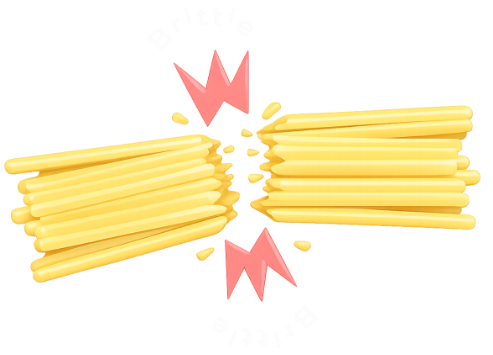
How Do They Work?

They soften and improve flexibility.

They soften and improve flexibility.
Think of uncooked spaghetti:
it’s stiff and brittle—like some polymers.

Cook it (add water = plasticizer),
and it becomes flexible.
What’s the Problem?

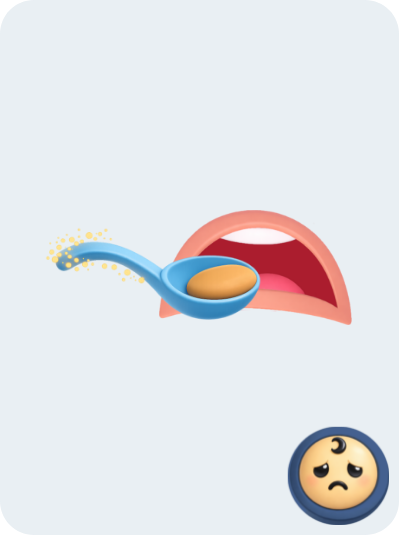
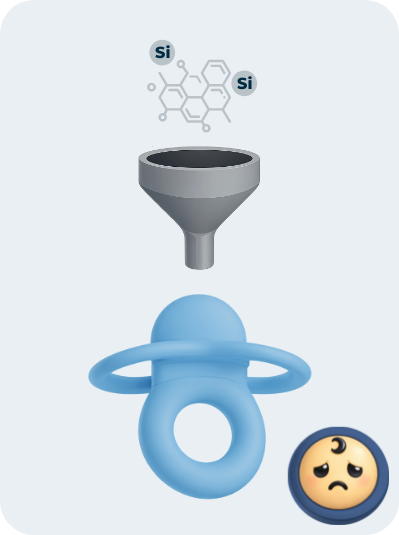
Some plasticizers can migrate out of materials, just like water seeps out of cooked pasta. Other naturally soft materials like Silicone require complex additives leading to difficulties in the final product. This can lead to exposure risks for people and the environment. This is specifically critical for babies, where soft materials are required for products like teethers and baby spoons. Luckily, the EU has strong safety regulations for food-contact materials.

The PLANETS Solution

PLANETS partners will test 2 alternatives enabling material strategies: developing a safer plasticizer thermoplastic elastomer (TPE) formulation and a silicone elastomer formulation:

1

Silicone elastomers selected will be used for a teether prototype guided by SSbD principles (safe material free of Bisphenol A, sustainable European and recycled solutions) while benefiting from biocompatibility and safe food contact of silicone materials.

2

TPE formulations will lead to a baby spoon prototype guided by SSbD principles (selecting polymers containing recycled content and other functional additives, free of Phthalates plasticizers) according to European food contact regulations.

  • Safe
  • Sustainable
  • Flexible
  • Biocompatible
  • Recyclable
All applications

Contact

Plasticizers, fLame–retardants and surfactANts: new alternatives validating the safE and susTainable by deSign approach 

  • info@project-planets.eu

Helpful links

Downloads
Legal Notice
Privacy Policy
EN_FundedbytheEU_RGB_WHITE Outline

This project received funding from the European Union’s Horizon Europe research and innovation programme under grant agreement n° 101177608. Views and opinions expressed are however those of the author(s) only and do not necessarily reflect those of the European Union. Neither the European Union nor the granting authority can be held responsible for them.


PLANETS is a member of NSC.

back to top